
Introduction
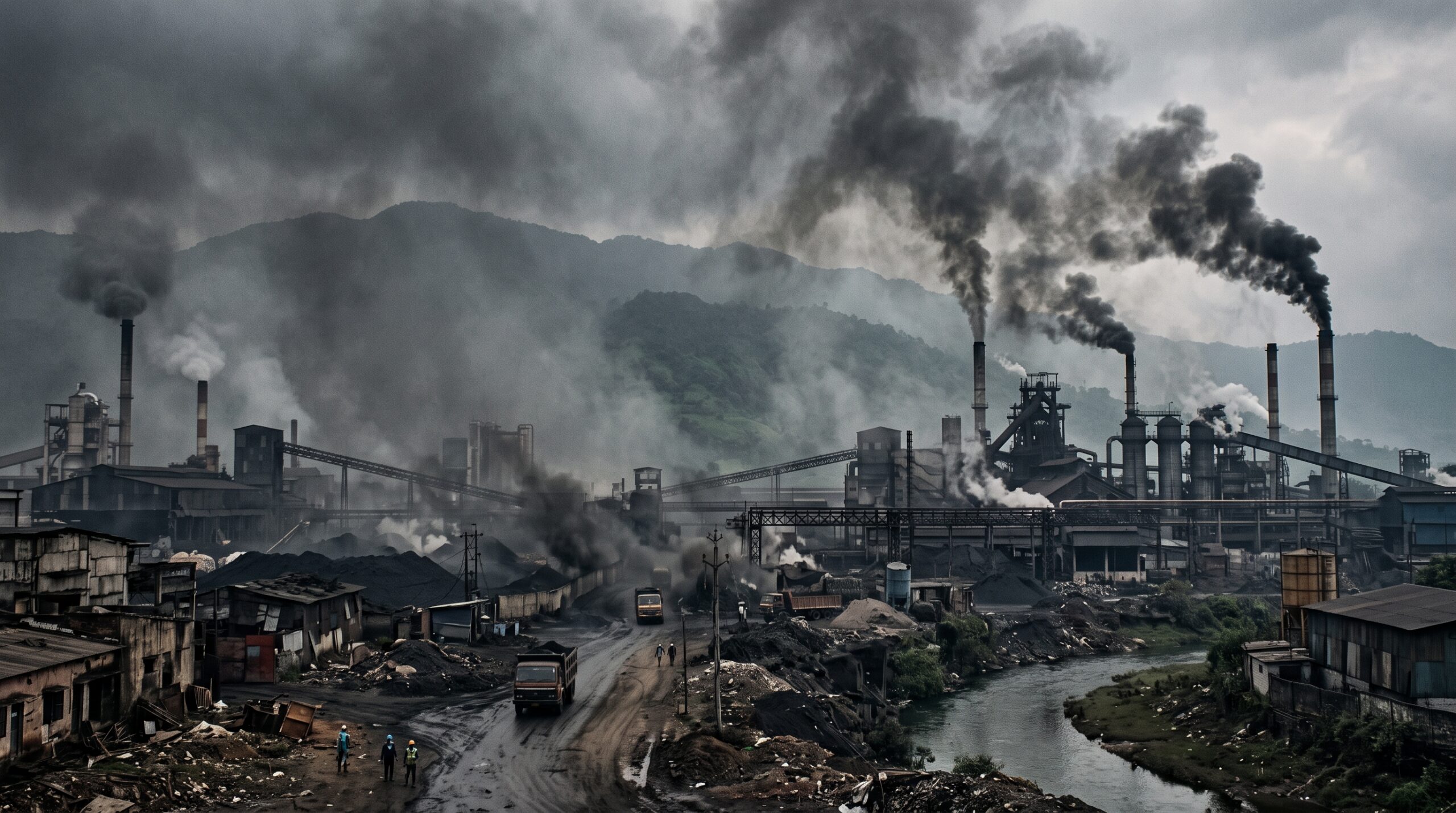
Meghalaya’s Byrnihat Pollution Crisis : When people think about air pollution in India, cities like Delhi, Mumbai, or Kolkata usually come to mind. However, over the past few years, a small industrial town in Meghalaya has caught everyone’s attention for a different reason. Byrnihat, located on the border of Meghalaya and Assam, has become one of the most polluted places in the country. In 2025, it was even listed as the world’s most polluted metropolitan area in the annual report released by IQAir, a global air quality monitoring organization. watch this video on Instagram
This shocking ranking has raised serious concerns among environmental experts, health professionals, and local residents. Many people living in Byrnihat have complained about breathing problems, eye irritation, skin diseases, and other health issues. The town, once known mainly for its industries, is now becoming an example of how rapid industrial growth without proper environmental protection can affect people’s lives. For read more such articles do visit on Postvaani
Where Is Byrnihat?
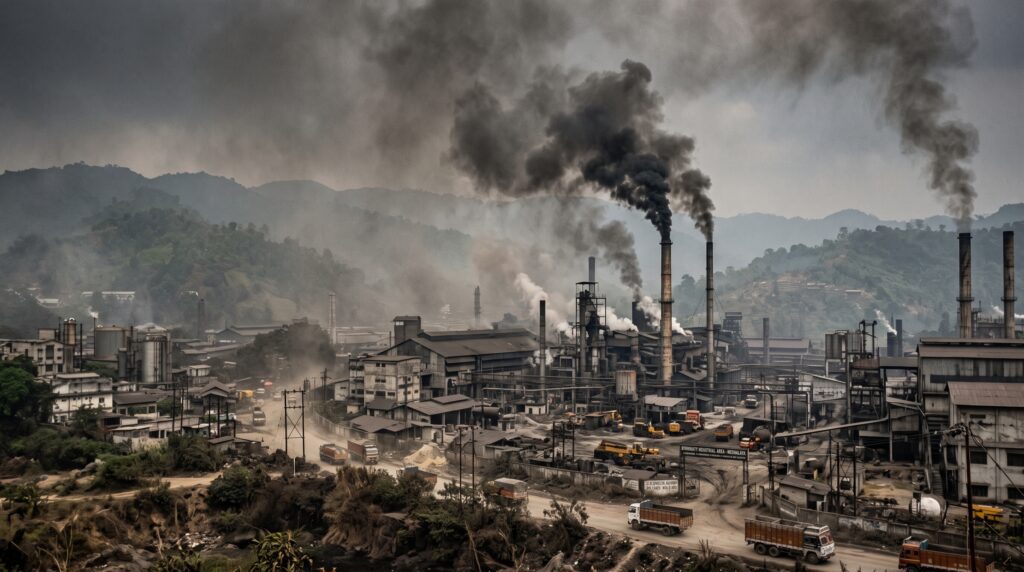
Byrnihat is a growing industrial town situated in the Ri-Bhoi district of Meghalaya. It lies along the Meghalaya-Assam border and is connected by a national highway. Due to its strategic location near Guwahati, many industries have been established here over the past two decades. The area has become an important manufacturing hub for both states.
Today, Byrnihat is home to dozens of factories that produce cement, ferroalloys, steel products, chemicals, beverages, plastics, and other industrial goods. While these industries have created employment and supported economic growth, they have also increased pollution in the region.
Why Has Byrnihat Become So Polluted?
Air pollution in Byrnihat is not caused by a single factor. Instead, it is the result of several environmental and human activities that together have made the situation worse.
1. Large Number of Industries
Meghalaya’s Byrnihat Pollution Crisis- Industrial emissions are considered one of the biggest reasons behind Byrnihat’s poor air quality. Many factories release smoke, dust, and harmful gases during manufacturing. Although pollution control systems are required, experts believe that emissions from several industrial units have continued to affect the surrounding environment.
The Meghalaya State Pollution Control Board inspected several factories in recent years. Some industries were found violating pollution norms, and closure notices were issued to multiple units. Despite these actions, pollution levels have remained a serious concern.
2. Heavy Traffic Movement
Byrnihat lies on a busy highway connecting Assam and Meghalaya. Every day, thousands of trucks carrying industrial goods travel through the town. Diesel-powered vehicles release harmful pollutants such as nitrogen oxides, particulate matter, and carbon emissions.
Long traffic jams are common near the border. During these traffic slowdowns, vehicles continue running, increasing the amount of pollution released into the air. Road dust created by heavy vehicles also adds to the problem.
3. Dust from Construction and Roads
Construction work has increased rapidly as industries continue to expand. Many roads remain dusty, and heavy vehicles lift fine particles into the air throughout the day.
Dust pollution may appear harmless, but tiny particles known as PM2.5 and PM10 can enter the lungs and even reach the bloodstream. These particles are considered among the most dangerous forms of air pollution because they are too small to be seen by the human eye.
4. Geography Makes the Situation Worse
Environmental experts have also pointed to Byrnihat’s natural geography. The town is surrounded by hills and has a bowl-shaped landscape. During calm weather conditions, polluted air gets trapped close to the ground instead of moving away.
This means that smoke, dust, and industrial emissions remain in the atmosphere for longer periods. Even if pollution sources remain the same, the local geography makes the air quality much worse compared to open areas.
Meghalaya’s Byrnihat Pollution Crisis- Pollution Is More Than Just Dirty Air
The problem in Byrnihat is not limited to air pollution alone. Scientific studies have also found contamination in groundwater around the industrial area. Researchers detected heavy metals such as lead, cadmium, and chromium at levels higher than recommended safety standards in some locations.
These contaminants may enter drinking water and agricultural land, creating long-term health risks for local communities if proper treatment and monitoring are not maintained. Pollution has also affected nearby rivers and farming activities, making life more difficult for many residents.
Meghalaya’s Byrnihat Pollution Crisis: Why India’s Industrial Town Is Struggling to Breathe (Part 2)
How Pollution Is Affecting People’s Health
Meghalaya’s Byrnihat Pollution Crisis- The biggest impact of pollution in Byrnihat is on the health of local people. Many residents say that breathing has become difficult, especially during the winter months when smoke and dust remain trapped in the air. Hospitals and health centres have reported an increase in patients suffering from cough, asthma, breathing problems, and chest infections. Doctors also say that eye irritation, skin rashes, and allergies have become common complaints among people living close to industrial areas.
Children and elderly people are the most affected because their bodies are more sensitive to polluted air. Long-term exposure to PM2.5 particles can increase the risk of heart disease, lung disease, stroke, and even certain types of cancer. These tiny particles are so small that they can enter deep into the lungs and even reach the bloodstream.
Farmers have also reported that dust and industrial emissions settle on crops and reduce their quality. Some residents say that clothes cannot be dried outside because they quickly become covered with black dust. These problems have made daily life difficult for many families.
Why Byrnihat Ranked Among the World’s Most Polluted Areas
The annual World Air Quality Report published by IQAir brought global attention to Byrnihat after it recorded an annual average PM2.5 concentration of about 128 micrograms per cubic metre in 2024, making it one of the most polluted metropolitan areas in the world. This level is many times higher than the air quality guideline recommended by the World Health Organization (WHO).
Experts believe that no single source is responsible. Instead, pollution is caused by a combination of industrial emissions, heavy truck movement, road dust, construction activities, burning of waste, and the town’s geographical location, which traps polluted air. This combination has made the air quality much worse than many larger cities.
Government Action to Control Pollution
Meghalaya’s Byrnihat Pollution Crisis – After pollution levels became a national concern, both the Meghalaya and Assam governments started taking steps to improve air quality.
The Meghalaya State Pollution Control Board inspected several industrial units and found that many were not following environmental rules. Closure notices were issued to industries that failed to control emissions, while some factories were temporarily shut down until they met pollution standards.
At the same time, both state governments agreed that pollution cannot be controlled by one state alone because Byrnihat lies on the border. A joint committee was formed to monitor industries, improve air quality monitoring, and develop long-term solutions for the region.
Authorities have also discussed better traffic management, stricter pollution checks for industries, more tree plantation drives, and stronger implementation of the National Clean Air Programme (NCAP). These measures are expected to reduce pollution over time, although experts say consistent enforcement is necessary.
Challenges That Still Remain
Despite government action, solving Byrnihat’s pollution problem will not be easy.
The town has around 80 industries that provide employment to thousands of people. Closing factories permanently could affect the local economy and people’s livelihoods. Therefore, authorities must find a balance between industrial development and environmental protection.
Another challenge is that pollution crosses state borders. Since industries are located in both Meghalaya and Assam, action taken by only one state cannot completely solve the problem. Better coordination, data sharing, and common pollution standards are required.
Monitoring pollution throughout the year is also important because air quality changes with weather conditions. Experts believe continuous monitoring and public reporting will help identify pollution sources more accurately.
What Can Be Done?
Meghalaya’s Byrnihat Pollution Crisis- Environmental experts have suggested several practical solutions to improve air quality in Byrnihat.
Industries should install modern pollution-control equipment and maintain it regularly. Factory emissions should be monitored continuously, and strict penalties should be imposed on units that violate environmental rules.
Heavy trucks should be inspected regularly to reduce vehicle emissions. Better road maintenance can reduce dust pollution, while covering construction materials can prevent fine particles from spreading into the air.
Tree plantation should also be encouraged because green spaces help improve air quality. Local communities can support these efforts by avoiding open waste burning and reporting pollution violations to the authorities.
Most importantly, both Meghalaya and Assam must continue working together because clean air cannot be achieved through isolated efforts.
Conclusion
Meghalaya’s Byrnihat Pollution Crisis- Byrnihat’s pollution crisis is a reminder that economic growth should never come at the cost of public health. The town has developed into an important industrial centre, but years of unchecked emissions, increasing traffic, road dust, and weak environmental compliance have created serious air pollution.
The good news is that governments have started taking action. Industrial inspections, closure of non-compliant units, better monitoring, and joint efforts between Meghalaya and Assam are positive steps. However, lasting improvement will require strict implementation of environmental laws, cleaner technologies, responsible industries, and active public participation.
Clean air is a basic necessity for every citizen. Byrnihat’s experience should encourage policymakers, industries, and communities across India to adopt sustainable development practices that protect both economic progress and the environment.

Great content! Keep up the good work!