
postvaani

Why Cricket Is So Popular in India

Introduction

Why Cricket Is So Popular in India : Cricket is one of the most loved sports in India. It is watched by millions of people every day. It is played in villages, towns, and big cities. People of all ages enjoy this game. Children, teenagers, adults, and even older people are seen watching cricket matches together.

In India, cricket is not just a sport. It is considered an emotion. Whenever the Indian cricket team plays, excitement is felt across the country. Roads become empty during important matches. Television screens, mobile phones, and stadiums are filled with cricket lovers.

But have you ever wondered why cricket is so popular in India? Many reasons can be found behind its success. In this article, those reasons will be explained in very simple words.


History of Cricket in India

Why Cricket Is So Popular in India : Cricket was brought to India by the British during the 18th century. At first, the game was played only by British officers. Later, it was learned by Indian people.

Over time, cricket became more popular. Local clubs were formed. Domestic tournaments were started. Slowly, the game was accepted by people across the country.

After India won the Cricket World Cup in 1983, cricket became even more famous. That victory changed everything. The confidence of Indian cricket was increased. Since then, cricket has been loved by millions of Indians. For more informative articles like this, visit Postvaani.com and stay updated with the latest insights and news.


Cricket Is Easy to Play

One big reason for the popularity of cricket is that it is easy to play.

A proper cricket ground is not always needed. The game can be played in streets, parks, school grounds, or empty fields.

Only a bat and a ball are needed. Even if a cricket bat is not available, a wooden stick can be used. If wickets are not available, bricks or stones are often used.

Because of this, cricket can be enjoyed by almost everyone.


Cricket Is Played Everywhere

Why Cricket Is So Popular in India : Cricket is played in every part of India. It is played in schools, colleges, villages, and cities.

Many children start playing cricket at a very young age. Friendly matches are organized during holidays. Local tournaments are also held in many areas.

Because the game is seen everywhere, interest in cricket is naturally developed among people.


Success of the Indian Cricket Team

Why Cricket Is So Popular in India : The success of the Indian cricket team has played a very important role.

Many great victories have been achieved by India over the years. These victories have made Indian fans proud.

Some unforgettable achievements include:

  • Winning the 1983 Cricket World Cup.
  • Winning the 2007 T20 World Cup.
  • Winning the 2011 Cricket World Cup.
  • Winning the 2013 Champions Trophy.

Whenever India wins an important match, celebrations are held across the country.

These victories have inspired many young players to choose cricket.


Famous Indian Cricket Players

Many cricket players have become national heroes.

Players like Sachin Tendulkar, MS Dhoni, Virat Kohli, Rohit Sharma, Kapil Dev, Rahul Dravid, and Sourav Ganguly are respected by millions.

Their hard work, discipline, and success have inspired young children.

Many children dream of becoming professional cricketers after watching these players.

Their stories have encouraged many families to support cricket.


Indian Premier League (IPL)

Why Cricket Is So Popular in India : The Indian Premier League (IPL) has made cricket even more popular.

The IPL was started in 2008. Since then, millions of people have watched it every year.

In the IPL, players from different countries play together. Fast matches, exciting finishes, and entertainment are provided.

Every team has loyal fans. Jerseys are worn by supporters. Stadiums become full during matches.

The IPL has also given young Indian players a chance to show their talent.

Many international stars have been discovered through this tournament.


Cricket Is Shown Everywhere

Why Cricket Is So Popular in India : Today, cricket can be watched very easily.

Matches are shown on television, mobile phones, laptops, and streaming apps.

Live scores can also be checked on websites and social media.

Because of easy access, cricket has become a part of daily life for many people.

Fans can follow every match from anywhere.


Family Entertainment

Cricket is enjoyed by the whole family.

Parents, children, grandparents, and friends often watch matches together.

Important matches are treated like festivals in many homes.

Food is prepared. Friends are invited. Excitement is shared by everyone.

This family connection has made cricket even more special.


Emotional Connection

Cricket creates strong emotions.

People celebrate when India wins.

People feel disappointed when India loses.

Every six, four, and wicket brings excitement.

Many unforgettable memories are created during important matches.

This emotional connection makes cricket much more than just a sport.


Media and Social Media Support

Cricket receives huge attention from television channels, newspapers, websites, and social media.

Match highlights are shared quickly.

Player interviews are watched by millions.

News about cricket is published every day.

Fans discuss every match on social media platforms.

This constant coverage keeps cricket popular throughout the year.


Sponsorship and Business

Cricket is also supported by many big companies.

Large sponsorship deals are signed with players and teams.

Advertisements are shown during matches.

Many companies promote their products through cricket.

Because of this financial support, better tournaments and facilities are provided.

The popularity of cricket continues to grow every year.


Career Opportunities in Cricket

Today, cricket offers many career options.

A person does not have to become only a player.

Many other careers are available, such as:

  • Cricket coach
  • Umpire
  • Commentator
  • Sports journalist
  • Fitness trainer
  • Video analyst
  • Team manager
  • Photographer
  • Content creator

Because many career paths are available, more young people become interested in cricket.


Support from Schools and Academies

Many cricket academies have been opened across India.

Professional coaching is provided to young players.

School tournaments and college competitions are also organized regularly.

Talented players are given opportunities to grow.

This strong system helps Indian cricket become better every year thats why Cricket Is So Popular in India.


Influence of Social Media

Social media has increased the popularity of cricket.

Fans follow their favorite players on Instagram, YouTube, Facebook, and X.

Practice videos, match clips, and interviews are watched daily.

Young fans feel more connected to their favorite players.

This has helped cricket reach even more people.


Cricket Brings People Together

Cricket has the power to unite people.

People from different religions, languages, and cultures support the same team.

During important matches, millions of Indians cheer together.

Differences are often forgotten for a while.

This unity makes cricket very special in India.


Why Young People Love Cricket

Young people enjoy cricket because it is exciting.

Big sixes, fast bowling, amazing catches, and close finishes make every match interesting.

Many children play cricket after school.

Some dream of playing for India one day.

Others simply enjoy the fun of the game with friends.


Conclusion

Cricket is so popular in India because it has become a part of the country’s culture. It is easy to play, simple to understand, and enjoyed by people of all ages. Great victories, legendary players, the IPL, strong media coverage, and emotional moments have all helped cricket grow.

Today, cricket is not just a game in India. It is celebrated like a festival. It brings happiness, hope, and unity to millions of people.

As new players continue to emerge and more tournaments are organized, the love for cricket will continue to grow. It can be expected that cricket will remain India’s favorite sport for many years to come.
One thought on “Why Cricket Is So Popular in India

Leave a Reply

Your email address will not be published. Required fields are marked *

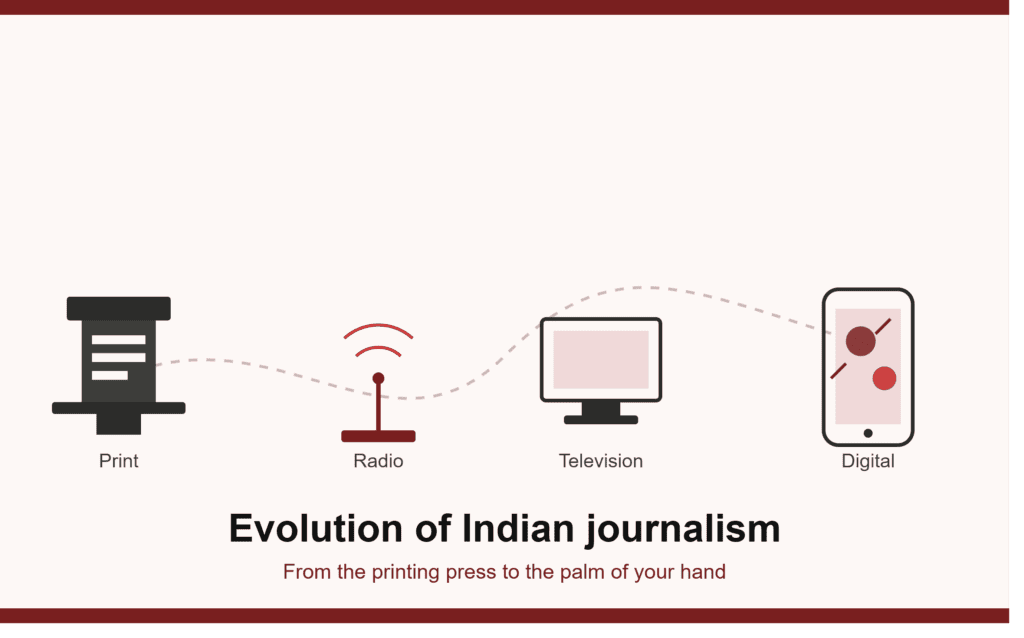
Evolution of Indian Journalism

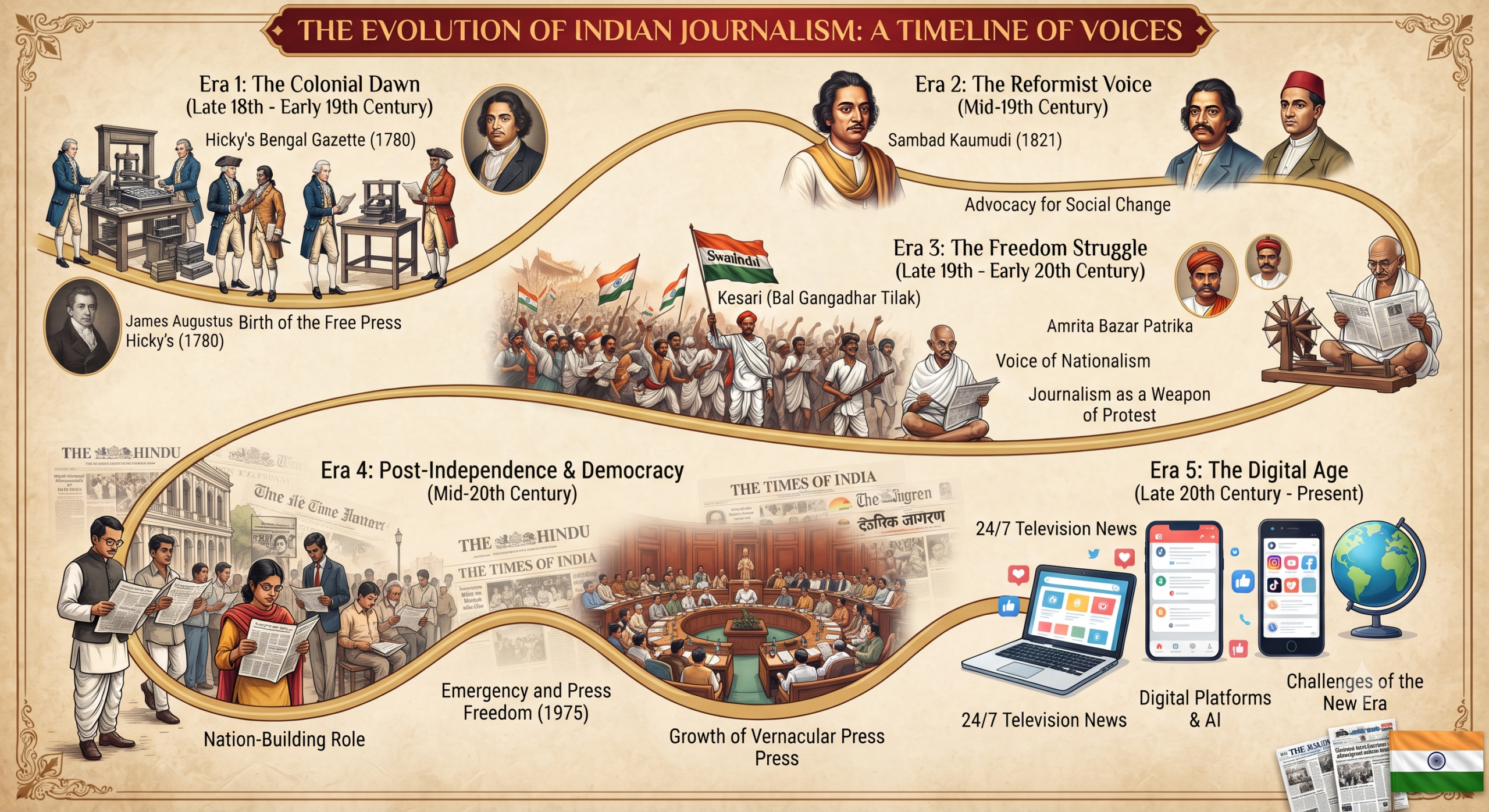
Evolution of Indian Journalism and Mass Communication : Journalism and mass communication have played an important role in the development of India. News and information have been shared through different forms of media for many years. Public awareness has been increased, and people have been connected through newspapers, radio, television, and digital platforms.

The evolution of Indian journalism and mass communication has been shaped by many social, political, and technological changes. New ways of sharing information have been introduced over time. Today, news can be received within seconds through the internet and mobile phones.

In this article, the history, growth, importance, and future of Indian journalism and mass communication will be explained in very simple English. For more informative articles like this, visit Postvaani.com and stay updated with the latest insights and news.


What Is Journalism?

Journalism is the process through which news and information are collected, verified, and shared with the public. News is reported about politics, business, education, sports, entertainment, health, science, and many other topics.

Journalists are responsible for finding facts and presenting them to the people. Information is expected to be shared in a fair, accurate, and responsible way.

Different types of journalism are practiced today. These include:

  • Print journalism
  • Television journalism
  • Radio journalism
  • Digital journalism
  • Investigative journalism
  • Photojournalism

Each type of journalism serves a different purpose, but all are used to inform the public.


What Is Mass Communication?

Mass communication is the process through which information is shared with a large number of people at the same time. Different media platforms are used for this purpose.

Some common forms of mass communication are:

  • Newspapers
  • Magazines
  • Radio
  • Television
  • Websites
  • Social media
  • Podcasts

Through mass communication, news, education, entertainment, and public messages can be delivered to millions of people.


The Beginning of Journalism in India

Evolution of Indian Journalism : The history of Indian journalism is very old. The first newspaper in India was started during British rule.

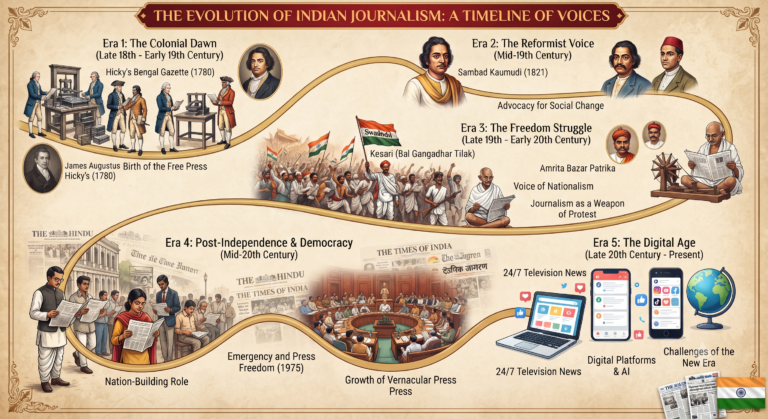
In 1780, Hicky’s Bengal Gazette was published in Kolkata. It is considered the first printed newspaper in India. News about government policies and public issues was shared through this newspaper.

After that, many newspapers were started in different parts of the country. News was slowly made available to more people.

Indian-language newspapers were also introduced. As a result, information could be understood by people in different regions.


Journalism During the Freedom Struggle

Evolution of Indian Journalism : Journalism played a very important role during India’s freedom movement.

Many newspapers were used to spread awareness among the people. Messages about freedom, equality, and justice were shared through articles and editorials.

Several famous leaders also used newspapers to communicate with the public.

Among them were:

  • Mahatma Gandhi
  • Bal Gangadhar Tilak
  • Lala Lajpat Rai
  • Bipin Chandra Pal

Newspapers such as Young India, Harijan, and Kesari were widely read during that period.

Many newspapers were controlled by the British government. Strict laws were introduced, and several publications were banned. Even after these restrictions, the voice of the freedom movement continued to be heard through journalism.

Because of these efforts, journalism became a powerful tool for social and political change.


Evolution of Indian Journalism : Journalism After Independence

Evolution of Indian Journalism : After India became independent in 1947, many changes were seen in journalism.

More newspapers were published in different languages. Regional journalism was also expanded. Better printing technology was introduced.

The number of readers was increased because education was improved across the country.

News about government policies, development projects, elections, sports, and education was regularly published.

Journalism became one of the most trusted sources of information for the public.


Evolution of Indian Journalism : The Growth of Radio in India

Radio became one of the most popular forms of mass communication in India.

Many families depended on radio for news, music, weather updates, and educational programmes.

All India Radio (AIR) played a major role in spreading information across the country.

Radio was especially useful in villages where newspapers and television were not easily available.

Government announcements and emergency information were also shared through radio.

Even today, radio continues to be used in many parts of India.


The Rise of Television Journalism

Evolution of Indian Journalism : Television changed journalism in a major way.

News could now be watched instead of only being read.

In the beginning, only one government television channel was available. Later, many private news channels were launched.

Live reporting became possible.

People were able to watch:

  • Election results
  • Sports events
  • Natural disasters
  • Government announcements
  • International news

Television journalism became one of the fastest ways to receive information.

As technology improved, better picture quality and live broadcasting were introduced.


Evolution of Indian Journalism : The Digital Revolution in Journalism

A major change was seen after the internet became popular.

Online news websites were started.

Digital newspapers were introduced.

News could now be read on computers, tablets, and mobile phones.

Breaking news began to reach people within minutes.

Social media platforms also became important sources of information.

Today, many people read news through:

  • Google News
  • News websites
  • Mobile apps
  • Facebook
  • Instagram
  • X (formerly Twitter)
  • YouTube

Digital journalism has made news faster and easier to access.

However, fake news and misinformation have also become major challenges.

Because of this, fact-checking has become more important than ever.


Importance of Journalism and Mass Communication

Evolution of Indian Journalism : Journalism and mass communication are important for every society.

Many benefits are provided through responsible journalism.

Some of them are listed below.

Information Is Shared

People are informed about national and international events.

Public Awareness Is Increased

Important social issues are discussed.

People are encouraged to understand their rights and responsibilities.

Democracy Is Strengthened

Government activities are reported.

Public opinion is represented through the media.

Transparency is promoted when accurate reporting is practiced.

Education Is Supported

Educational programmes, awareness campaigns, and public service messages are shared through different media.

Students and citizens are helped through useful information.

The Role of Social Media in Journalism

Social media has changed the way news is shared in India. Today, news can be received within a few seconds. Information can be shared with millions of people through one post.

Platforms such as Facebook, Instagram, YouTube, WhatsApp, and X (formerly Twitter) are widely used for news and updates.

Many news organizations have created official social media pages. Breaking news, live videos, interviews, and news updates are regularly posted on these platforms.

Journalists also use social media to connect with the public. Public opinions can be understood through comments and discussions. News tips and eyewitness videos are often received through social media.

However, false information can also be shared very quickly. Because of this, every news story should be verified before it is published or shared.


Challenges Faced by Indian Journalism

Many changes have been seen in Indian journalism. Along with these changes, several challenges have also been faced.

Fake News

Fake news has become one of the biggest problems. Incorrect information can be spread very quickly through social media.

Because of this, confusion can be created among people.

Fact-checking should always be done before any news is published.

Misinformation

Sometimes, incomplete or misleading information is shared. As a result, the truth may not be understood clearly.

Responsible reporting should be practiced to avoid misinformation.

Pressure on Journalists

Journalists may face pressure while reporting on sensitive topics. In some situations, independent reporting can become difficult.

Fair and balanced reporting should always be encouraged.

Competition

A large number of news websites and television channels are available today.

Because of this, strong competition is faced by media organizations.

Fast reporting is important, but accuracy should never be ignored.

Decline of Print Media

Digital platforms are being preferred by many readers. Because of this, newspaper sales have been reduced in some areas.

Even so, print journalism continues to be trusted by many people because detailed and verified information is often provided.


Ethics in Journalism

Ethics are very important in journalism. Every journalist is expected to follow professional values while reporting.

Some important ethics are listed below.

  • Truth should be reported.
  • Facts should be verified.
  • Personal opinions should be separated from news reports.
  • Privacy should be respected.
  • Hate speech should be avoided.
  • Accurate information should be shared.

When these ethics are followed, public trust can be maintained.


The Impact of Artificial Intelligence (AI) on Journalism

Artificial Intelligence (AI) has become an important part of modern journalism.

Many tasks can now be completed with the help of AI.

For example:

  • News summaries can be created.
  • Grammar mistakes can be corrected.
  • Headlines can be suggested.
  • News trends can be identified.
  • Data can be analyzed quickly.

AI has made many processes faster. However, human journalists are still needed.

Facts should always be checked by journalists before news is published. Human judgment is required to ensure fairness, accuracy, and context.


Career Opportunities in Journalism and Mass Communication

Many career options are available in journalism and mass communication.

Students can choose different fields based on their interests.

Some popular career options are:

  • News Reporter
  • News Anchor
  • Content Writer
  • Editor
  • Copy Editor
  • Digital Journalist
  • Photojournalist
  • Video Journalist
  • Social Media Manager
  • Public Relations Officer
  • Radio Jockey
  • Television Producer
  • News Producer
  • Media Researcher
  • Communication Specialist

These careers can be found in newspapers, television channels, radio stations, digital media companies, advertising agencies, and government organizations.


Advantages of Journalism and Mass Communication

Many benefits are provided through journalism and mass communication.

Some major advantages are:

  • Information is shared quickly.
  • Public awareness is increased.
  • Education is supported.
  • Democracy is strengthened.
  • Government actions are monitored.
  • Public voices are represented.
  • Social issues are highlighted.
  • Emergency information is communicated.

Because of these benefits, journalism is considered an important part of society.


Future of Indian Journalism and Mass Communication

The future of Indian journalism is expected to be shaped by technology and changing reader habits.

Digital journalism is likely to grow further. Mobile phones, artificial intelligence, podcasts, and video content are expected to become even more popular.

Regional language journalism is also expected to grow because more people prefer reading news in their own language.

Fact-checking is likely to become more important as digital content continues to increase.

Readers are expected to demand accurate, transparent, and trustworthy reporting.

As technology continues to improve, journalism is expected to remain an important source of information for society.


Conclusion

The evolution of Indian journalism and mass communication has been influenced by history, technology, and social change. From printed newspapers during the British period to today’s digital news platforms, many developments have been seen over the years.

Journalism has been used to inform people, support democracy, raise public awareness, and encourage discussions on important issues. At the same time, new challenges such as fake news and misinformation have also emerged.

Technology has made news faster and easier to access. However, the importance of accurate reporting, ethical journalism, and fact-checking has become even greater.

In the coming years, Indian journalism and mass communication are expected to continue evolving. New technologies will be adopted, but the main purpose of journalism—to provide truthful and reliable information—will remain unchanged.


Frequently Asked Questions (FAQs)

1. What is journalism?

Journalism is the process through which news and information are collected, verified, and shared with the public.

2. What is mass communication?

Mass communication is the sharing of information with a large number of people through newspapers, television, radio, websites, social media, and other media platforms.

3. What is the importance of journalism in India?

Journalism helps people stay informed, supports democracy, increases public awareness, and highlights important social issues.

4. Who started the first newspaper in India?

Hicky’s Bengal Gazette, published in 1780, is widely regarded as the first printed newspaper in India.

5. How has digital media changed journalism?

Digital media has made news faster, easier to access, and available on mobile phones and computers. It has also increased the importance of fact-checking.

6. What are the main challenges faced by Indian journalism?

Some major challenges include fake news, misinformation, competition, pressure on journalists, and the decline of print media.

7. Why are ethics important in journalism?

Ethics help ensure that news is accurate, fair, responsible, and trustworthy.

8. How is AI being used in journalism?

AI is being used to summarize news, analyze data, suggest headlines, and improve productivity. Human oversight is still essential.

9. What career options are available in journalism and mass communication?

Career options include reporter, editor, content writer, news anchor, digital journalist, social media manager, public relations officer, and producer.

10. What is the future of Indian journalism?

The future is expected to be driven by digital platforms, AI, regional language content, and stronger fact-checking practices. For more informative articles like this, visit Postvaani.com 

Leave a Reply

Your email address will not be published. Required fields are marked *

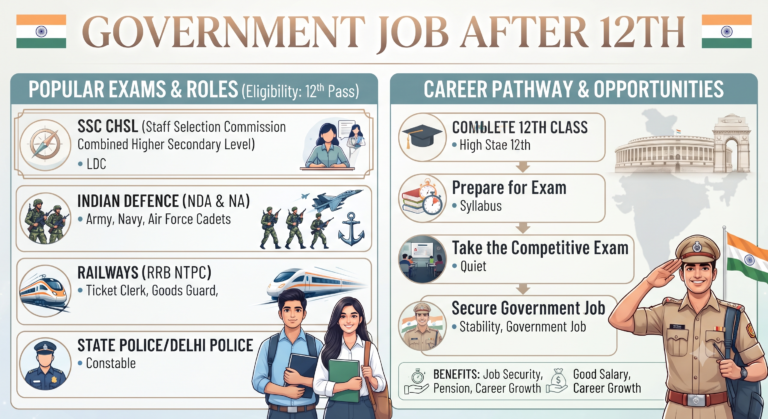
Government Job After 12th: Best Jobs, Eligibility, Salary, and Career Guide

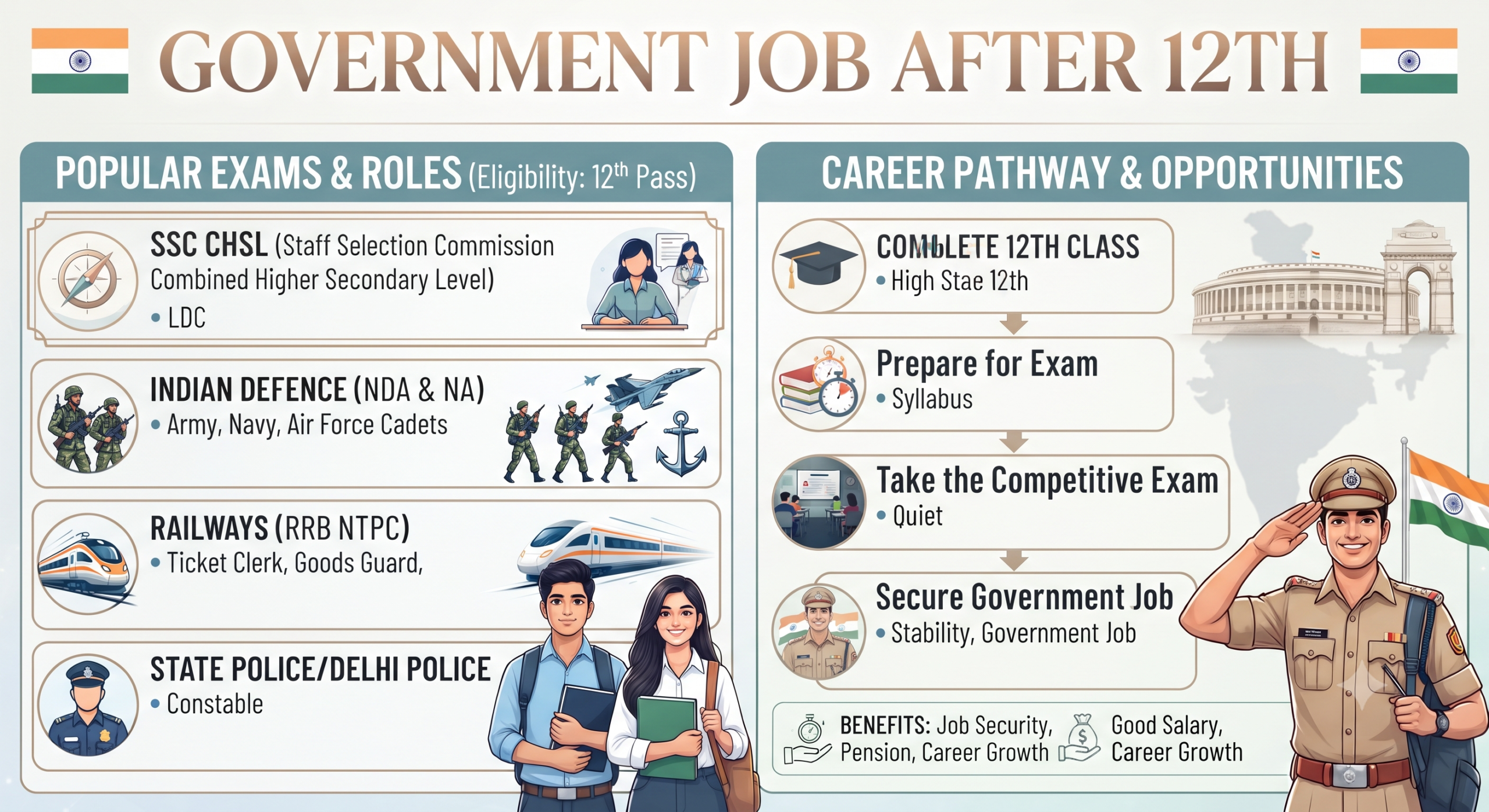
Many students dream of getting a government job after 12th. A government job is preferred because job security, a good salary, and many benefits are offered. A stable career can also be built through these jobs.

After passing Class 12, many government job opportunities can be found in different departments. Jobs can be applied for in the railway sector, banking sector, police department, defence services, postal department, and many other government organizations.

In this article, the best government jobs after 12th, eligibility, salary, and important exams will be explained in very simple English. For more informative articles like this, visit Postvaani.com and stay updated with the latest insights and news.

Why Is a Government Job After 12th Preferred?

A government job after 12th is chosen by many students because many benefits are provided.

Some of the main benefits are given below.

  • Job security is provided.
  • A fixed salary is offered every month.
  • Medical benefits are provided.
  • Pension benefits may be received in some jobs.
  • Paid leave is given.
  • Promotions are offered based on experience and performance.
  • A good work-life balance is enjoyed in many government departments.

Because of these benefits, a government job after 12th is considered a good career option.

Can a Government Job Be Got After 12th?

Yes, many government jobs can be applied for after passing Class 12.

Some jobs require only the 12th pass qualification, while some jobs may require physical fitness tests or skill tests.

Most government jobs are offered through written examinations. After the exam, document verification and medical tests may also be conducted.

Eligibility for Government Jobs After 12th

The eligibility conditions may be different for different jobs. However, the common requirements are listed below.

Government Jobs After 12th- Educational Qualification

A Class 12 pass certificate should be held from a recognized board.

Age Limit

Usually, the minimum age is kept at 18 years.

The maximum age is generally between 25 and 30 years. Age relaxation is also provided for reserved categories according to government rules.

Nationality

Indian citizenship should be held for most government jobs.

Physical Fitness

Physical fitness standards are required for jobs in the police, defence, and paramilitary forces.

Best Government Jobs After 12th

Many government jobs can be applied for after Class 12. Some of the most popular jobs are explained below.

1. SSC CHSL

The Staff Selection Commission Combined Higher Secondary Level (SSC CHSL) examination is conducted every year.

Through this exam, candidates are selected for different government offices.

Some popular posts include:

  • Lower Division Clerk (LDC)
  • Data Entry Operator (DEO)
  • Junior Secretariat Assistant (JSA)

A good salary and many allowances are provided.

2. Railway Jobs (RRB)

Many jobs are offered by the Indian Railways every year.

Some popular posts are:

  • Ticket Clerk
  • Commercial Clerk
  • Junior Clerk
  • Train Clerk

A stable career can be built in the railway department.

3. Indian Army

Many students join the Indian Army after Class 12.

Recruitment is conducted for different posts through various entry schemes.

Training is provided after selection.

A respectable career can be built by serving the country.

4. Indian Air Force

The Indian Air Force also offers opportunities for 12th-pass students.

Selection is made through written examinations, physical tests, and medical examinations.

Technical and non-technical jobs are offered.

5. Indian Navy

The Indian Navy recruits 12th-pass candidates for different sailor and technical posts.

Good training, salary, and career growth are provided.

6. Delhi Police and State Police

Police constable recruitment is conducted regularly in different states.

Physical tests, written exams, and medical examinations are included in the selection process.

A government job with good career growth can be secured.

7. India Post (Postal Department)

The Indian Postal Department also recruits candidates for different posts.

Jobs may be offered as:

  • Postal Assistant
  • Sorting Assistant
  • Postman
  • Multi-Tasking Staff (in some recruitments)

A comfortable working environment is generally provided.

8. Forest Guard

Forest Guard jobs are offered by different state governments.

Nature lovers often prefer this job.

Physical fitness is required for this position.

Government Exams After 12th

Many competitive examinations are conducted every year.

Some important exams are listed below.

  • SSC CHSL
  • SSC MTS
  • RRB NTPC (12th Level)
  • RRB Group D
  • Indian Army Recruitment
  • Indian Air Force Recruitment
  • Indian Navy Recruitment
  • Police Constable Recruitment
  • India Post Recruitment
  • State Government Recruitment Exams

These examinations are conducted according to vacancies announced by the respective departments.

Salary of Government Jobs After 12th

The salary of a government job depends on the department, post, and pay level. In most cases, a good starting salary is offered. Along with the basic salary, many other benefits are also provided.

Some common benefits are listed below.

  • Dearness Allowance (DA)
  • House Rent Allowance (HRA)
  • Medical Benefits
  • Travel Allowance
  • Paid Leave
  • Pension benefits (for eligible posts)

The approximate monthly salary for some popular government jobs is given below.

Government JobApproximate Monthly Salary
SSC CHSL₹25,000 – ₹40,000
Railway Clerk₹22,000 – ₹35,000
Police Constable₹25,000 – ₹40,000
Indian Army₹30,000 – ₹45,000
Indian Air Force₹30,000 – ₹50,000
Indian Navy₹30,000 – ₹50,000
India Post₹22,000 – ₹35,000
Forest Guard₹22,000 – ₹35,000

Note: The salary may be changed from time to time by the government.


Selection Process for Government Jobs After 12th

A selection process is followed for most government jobs. The process may be different for different departments.

Usually, the following stages are included.

1. Written Examination

A written examination is conducted first. Questions are generally asked from:

  • General Knowledge
  • Mathematics
  • English
  • Reasoning
  • Current Affairs

2. Physical Test

A physical test is conducted for police, army, navy, air force, and some other jobs.

Running, height measurement, chest measurement, and physical fitness are checked.

3. Skill Test

A typing test or computer test may be conducted for office jobs.

4. Document Verification

Educational certificates and identity documents are verified.

5. Medical Examination

A medical examination is conducted before the final selection.


How to Prepare for Government Jobs After 12th

A proper study plan should be followed to get a government job.

Some simple preparation tips are given below.

Understand the Exam Pattern

The exam syllabus should be understood carefully before preparation is started.

Make a Daily Study Schedule

At least 4 to 6 hours should be given for study every day.

Regular practice should be done.

Read Current Affairs Daily

Newspapers and current affairs should be read every day.

General awareness can be improved through daily reading.

Solve Previous Year Papers

Old question papers should be solved regularly.

The exam pattern can be understood easily.

Confidence can also be improved.

Take Mock Tests

Online mock tests should be attempted every week.

Time management can be improved through regular practice. Also you can watch this video


Best Books for Government Job Preparation

Many good books are available for beginners.

Some popular books are listed below.

  • Lucent’s General Knowledge
  • Quantitative Aptitude by R.S. Aggarwal
  • A Modern Approach to Verbal and Non-Verbal Reasoning by R.S. Aggarwal
  • Objective General English by S.P. Bakshi
  • NCERT Books (Class 6–10) for General Studies

These books are recommended by many successful candidates.


Documents Required

Some important documents are required during the recruitment process.

These include:

  • Class 10 Marksheet
  • Class 12 Marksheet
  • Aadhaar Card
  • PAN Card (if required)
  • Passport-size Photographs
  • Caste Certificate (if applicable)
  • Domicile Certificate (if required)
  • Income Certificate (if applicable)

Original documents should be kept safely.


Advantages of Government Jobs After 12th

Many advantages are offered through government jobs.

Some important advantages are listed below.

  • Stable career
  • Fixed monthly income
  • Medical facilities
  • Paid holidays
  • Pension benefits (for eligible posts)
  • Career growth
  • Respect in society
  • Job security

Because of these benefits, government jobs are preferred by many students.


Challenges of Government Job Preparation

Some challenges may also be faced.

These include:

  • High competition
  • Limited vacancies
  • Long selection process
  • Regular study is required
  • Patience is needed

However, success can be achieved through hard work and consistent preparation.


Conclusion

A government job after 12th can be a great career option for students who want a secure and stable future. Many opportunities are offered in departments such as the Indian Railways, SSC, Police, Indian Army, Indian Air Force, Indian Navy, and India Post.

A good salary, job security, medical benefits, and career growth are provided through these jobs. Proper preparation should be started as early as possible. The syllabus should be completed on time, mock tests should be attempted regularly, and current affairs should be studied every day.

With dedication, discipline, and regular practice, a government job can be achieved after Class 12.


Frequently Asked Questions (FAQs)

Which is the best government job after 12th?

SSC CHSL, Railway jobs, Police Constable, Indian Army, Indian Air Force, and Indian Navy are considered among the best government jobs after 12th.

Can girls apply for government jobs after 12th?

Yes. Many government jobs are open to both male and female candidates.

What is the minimum age for government jobs after 12th?

In most cases, the minimum age is 18 years. However, it may vary depending on the recruitment.

Is SSC CHSL conducted every year?

Yes. SSC CHSL is usually conducted every year, subject to the official recruitment schedule.

Which government job offers the highest salary after 12th?

Jobs in the Indian Air Force, Indian Navy, and Indian Army generally offer higher starting salaries along with additional allowances.

Is coaching necessary for government job preparation?

No. Coaching is not compulsory. Many candidates qualify through self-study with the help of good books and mock tests.

Which subjects should be prepared?

General Knowledge, Mathematics, English, Reasoning, and Current Affairs should be prepared for most exams.

Can government jobs be applied for immediately after Class 12?

Yes. If the eligibility criteria are met, applications can be submitted after passing Class 12.

Is physical fitness required for all government jobs?

No. Physical fitness tests are mainly required for defence, police, and paramilitary jobs.

How can official job notifications be checked?

Official recruitment websites of SSC, RRB, UPSC, India Post, and the respective departments should be visited regularly for the latest notifications.

Leave a Reply

Your email address will not be published. Required fields are marked *

Cockroach Janta Party: Protest, Demands, and Public Reaction Explained

Cockroach Janta Party: Protest, Demands, and Public Reaction Explained : The Cockroach Janta Party (CJP) has been discussed across India in recent weeks. The movement has been noticed because of its unique name, creative protests, and strong messages about the problems faced by young people.

Many people have asked one question: What is the Cockroach Janta Party, and why is it protesting?

In this article, everything will be explained in very simple English. The protest, the main demands, and the public reaction will also be discussed.  For more informative articles like this, visit Postvaani.com and stay updated with the latest insights and news.

What Is the Cockroach Janta Party?

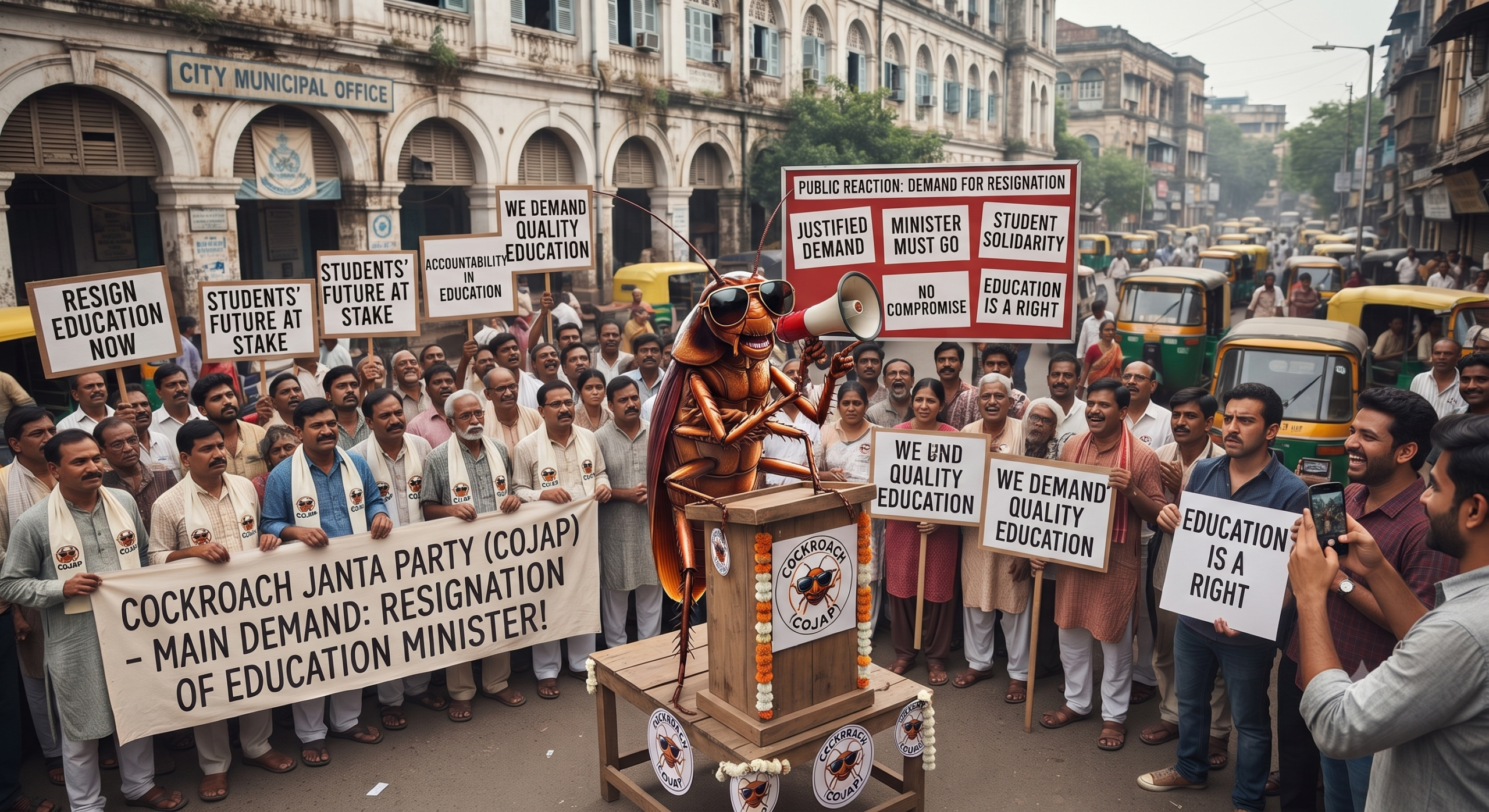
The Cockroach Janta Party, also called CJP, is a youth-led political movement. It has been started to raise questions about unemployment, education, corruption, and other issues that affect young people.

The name “Cockroach” was not chosen by accident. It was adopted after unemployed youth were compared to “cockroaches” during public discussions. Instead of rejecting the word, it was accepted by the movement as a symbol of survival, strength, and resistance.

Since then, the Cockroach Janta Party has become popular on social media. Millions of people have watched its videos, shared its posts, and joined its campaigns.

Why Is the CJP Protest Being Held?

The protest has been organized to demand changes in the education system and to seek accountability from the government.

According to the organizers, repeated examination problems and paper leak cases have damaged the future of many students. It has been said that students have worked hard, but their efforts have not always been protected because of irregularities.

The protest has also been used to highlight issues such as:

  • Unemployment
  • Examination paper leaks
  • Corruption
  • Rising cost of living
  • Lack of opportunities for young people

These issues have been presented as problems that require urgent attention.

What Are the Main Demands of the Protest?

Several demands have been placed before the government.

1. Better Protection of Public Examinations

It has been demanded that examination papers should be protected properly. Strict action has been requested against people involved in paper leaks.

2. Accountability in the Education System

The education system has been criticized by the protesters. Greater transparency and responsibility have been demanded.

3. Resignation of the Education Minister

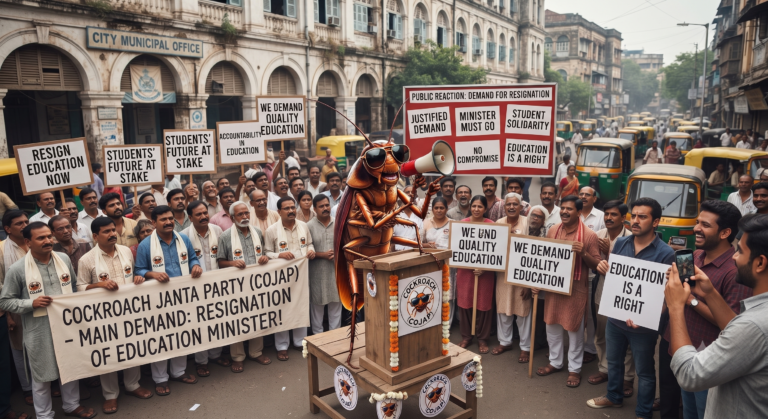
One of the major demands has been the resignation of Union Education Minister Dharmendra Pradhan over alleged failures related to examination management.

4. Fair Opportunities for Students

It has been demanded that every student should receive equal opportunities without being affected by corruption or administrative failures.

5. More Jobs for Young People

Employment opportunities have also been demanded. It has been argued that educated youth should not remain unemployed for long periods.

How Has the Protest Been Conducted?

The protest has been carried out in peaceful but creative ways.

Large groups of supporters have gathered at Jantar Mantar in New Delhi. Different forms of peaceful protest have been used to attract public attention.

In one protest, steel plates and spoons were used to create noise. This act reminded many people of a similar public event during the COVID-19 pandemic, but this time it was used as a political message.

Speeches, public meetings, and social media campaigns have also been organized.

Sonam Wangchuk’s Participation

The protest received more attention after educator and climate activist Sonam Wangchuk joined the movement.

An indefinite hunger strike was started by Wangchuk at the protest site. His health later became a matter of public concern after several days without food.

His participation brought greater national attention to the protest.

Social Media Has Played a Big Role

The Cockroach Janta Party has become very popular on social media platforms.

Videos, memes, speeches, and protest updates have been shared widely. Many young people have supported the movement online.

However, the party’s official X (formerly Twitter) account was blocked for some time. Later, the Delhi High Court ordered that the account should be restored. The court said the reasons given for blocking the account were no longer valid.

This decision was seen by many as an important development for online political expression.

How Has the Public Reacted?

Different reactions have been seen across the country.

Many students have expressed support for the protest. They have said that examination problems and unemployment are serious issues that deserve attention.

Some people have praised the movement because it has raised important questions in a peaceful and creative way.

Others have questioned whether symbolic protests alone can bring long-term change.

Political leaders and experts have also shared different opinions. As a result, the movement has become a topic of national discussion. To watch a video click on this link.

Why Is the Cockroach Janta Party Trending?

The movement has become popular for several reasons.

First, its unusual name has attracted curiosity.

Second, its creative protest methods have received wide media coverage.

Third, issues such as paper leaks, unemployment, and education have affected millions of young people. Because these issues are connected with everyday life, many people have shown interest in the movement.

Finally, court decisions related to the party’s social media account have also kept the movement in the news.

What Could Happen Next?

The future of the movement is still uncertain.

More protests may be organized if the demands are not accepted.

The government may announce new measures related to education or examinations. Public discussions on employment and education are also expected to continue.

The movement may continue to grow if more young people decide to join it.

Conclusion

The Cockroach Janta Party has become one of the most talked-about youth movements in India.

Important questions about education, unemployment, examination paper leaks, and accountability have been raised through its protests. Creative demonstrations and strong social media campaigns have helped the movement reach millions of people.

Support has been received from many students and young citizens, while criticism has also been expressed by others. Regardless of different opinions, the movement has started a wider discussion about the challenges faced by India’s youth.

The coming weeks will show whether the demands made by the protesters will lead to policy changes or further public debate.

Frequently Asked Questions (FAQs)

What is the Cockroach Janta Party (CJP)?

The Cockroach Janta Party is a youth-led political movement that raises issues related to education, unemployment, corruption, and public accountability.

Why is the Cockroach Janta Party protesting?

The protest has been organized to demand education reforms, action against examination paper leaks, greater accountability, and better opportunities for young people.

Where is the CJP protest taking place?

Major protests have been held at Jantar Mantar in New Delhi, with related demonstrations taking place in other cities.

What are the main demands of the CJP protest?

The movement has demanded stronger protection of examinations, action against paper leaks, accountability in the education system, more employment opportunities, and the resignation of the Union Education Minister.

Why is the Cockroach Janta Party trending?

The movement has become popular because of its unique name, creative protests, social media campaigns, and its focus on issues affecting students and young people.

Leave a Reply

Your email address will not be published. Required fields are marked *

Godi Media vs Independent Media: Understanding the Different Perspectives

Introduction

Godi Media vs Independent Media: Understanding the Different Perspectives- News is considered to be one of the most important sources of information in a democracy. Every day, millions of people are informed through television, newspapers, websites, YouTube channels, and social media platforms. Public opinion is often shaped by the news that is consumed. Because of this, the role of the media has always been considered important.

In recent years, the term “Godi Media” has been widely used in political discussions across India. At the same time, the phrase “Independent Media” has also gained attention. These two terms are often compared, especially during elections, major political events, and national debates.

Many people are confused about what these terms actually mean. Some believe that mainstream media is influenced by those in power. Others believe that independent media can also have its own opinions and biases. As a result, different viewpoints are held by different groups of people.

In this article, the meaning of both terms will be explained in simple words. Their differences, strengths, challenges, and role in society will also be discussed. A balanced understanding will be provided so that readers can form their own opinions.  For more informative articles like this, visit Postvaani.com and stay updated with the latest insights and news.

What Is Godi Media?

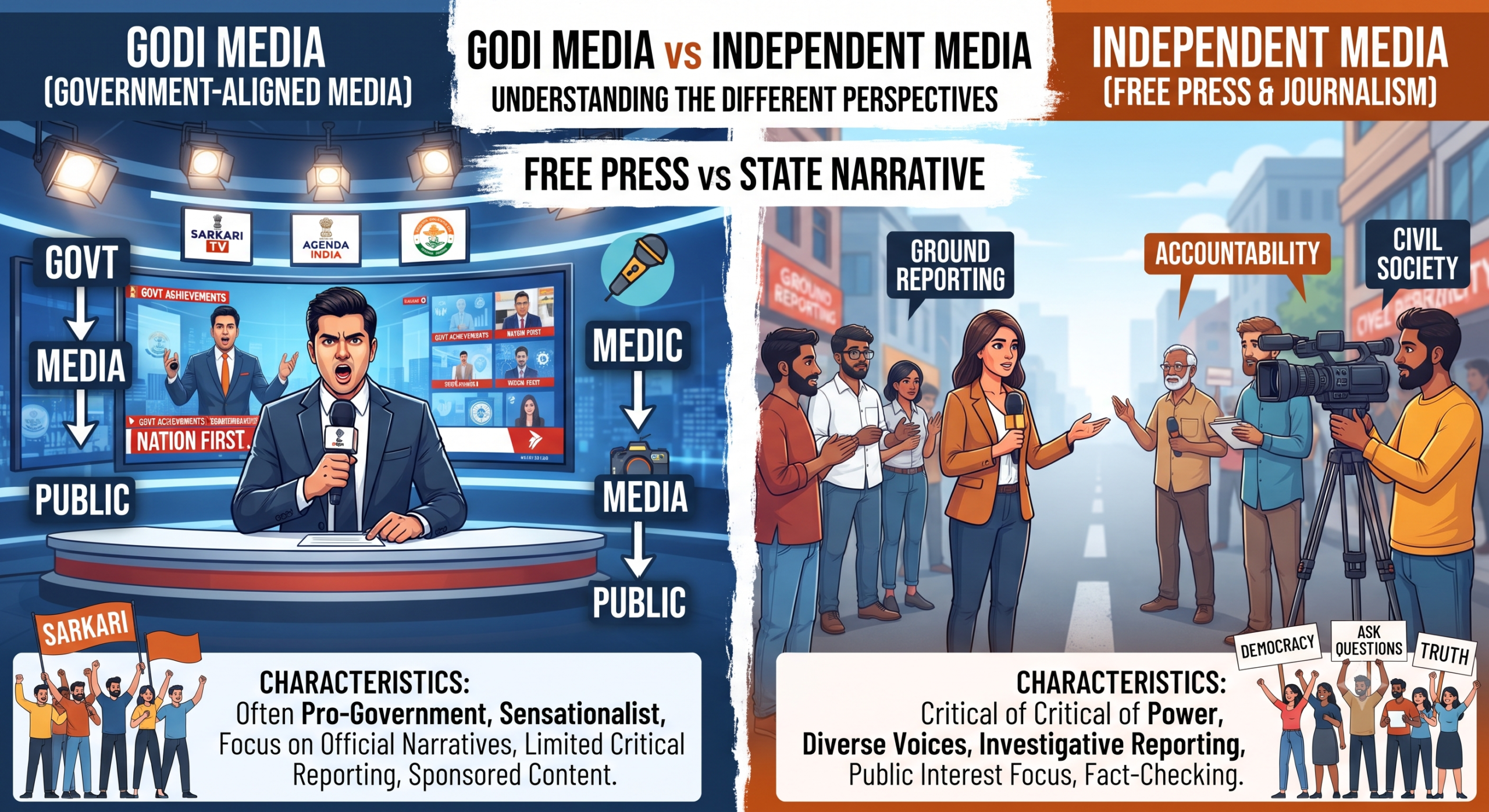
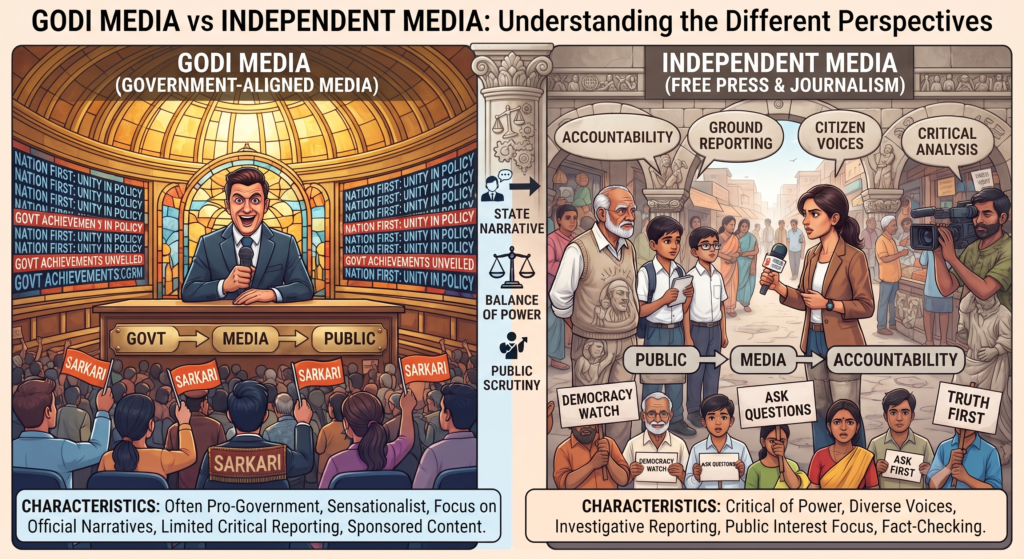
The term “Godi Media” is a political expression that has been used by critics to describe news organizations that are believed to show favorable coverage toward the government. The word “godi” comes from a Hindi word that means “lap.” In this context, the term is used to suggest that a media outlet is seen as being too close to those in power.

It should be noted that this is a political label, not an official media category. Some people use the term frequently, while others reject it completely. Because of this, the meaning of the term often depends on personal and political opinions.

Supporters of the term argue that some news channels focus more on government achievements than on criticism. They believe that difficult questions are not always asked and that some important issues may receive less attention.

On the other hand, many journalists and media organizations reject this label. They argue that their reporting follows professional standards and that the term is often used to dismiss viewpoints that some people disagree with.

For these reasons, the term remains controversial. It continues to be debated by politicians, journalists, and the public.

What Is Independent Media?

Independent media refers to news organizations or journalists who aim to work without direct control from governments, political parties, or large corporate interests. Their goal is usually to report stories with editorial independence.

Independent media can include digital news websites, investigative journalism platforms, podcasts, newsletters, YouTube channels, and nonprofit news organizations. In many cases, these platforms are supported through subscriptions, donations, advertisements, or memberships.

Many readers choose independent media because they believe that more detailed investigations and diverse viewpoints are provided. Topics that receive less attention in mainstream media may sometimes be covered in greater depth.

However, being independent does not automatically mean that every report is completely free from bias. Like any other media organization, independent outlets can also make mistakes or present stories from particular perspectives. For this reason, every news source should be examined carefully before it is trusted completely.

Why Do Some People Support Mainstream Media?

Godi Media vs Independent Media: Understanding the Different Perspectives, Mainstream media continues to be trusted by millions of people. Large television networks and newspapers have built their reputations over many years. Experienced journalists, editors, and fact-checkers are usually employed by these organizations.

Supporters believe that several advantages are offered by mainstream media.

First, large reporting teams can be sent to cover breaking news from different parts of the country. Live updates, expert interviews, and official statements can often be provided quickly.

Second, access to government officials, international agencies, and major institutions is usually available. Because of this, important information can often be collected directly from official sources.

Third, professional editorial processes are generally followed before stories are published. Reports are often reviewed by editors, and legal checks may also be carried out.

Supporters argue that these systems help reduce mistakes and improve reliability. They also believe that criticism of governments is regularly published when facts support such reporting.

At the same time, critics believe that commercial interests, advertising revenue, and competition for television ratings can influence editorial decisions. These concerns continue to be discussed in public debates.

Why Do Some People Prefer Independent Media?

Independent media has become more popular in recent years, especially on digital platforms. Many readers and viewers believe that these platforms offer stories that are not always covered by large news organizations. As a result, independent journalism has attracted a growing audience.

Several reasons are given by people who prefer independent media.

One reason is that investigative reporting is often given more attention. Long-form reports, detailed research, and ground-level stories are frequently published. Topics such as environmental issues, local governance, public welfare, and social concerns may receive greater coverage.

Another reason is that different opinions can be found more easily. Since many independent platforms are operated by smaller teams, a wider range of voices may be heard. Readers who want alternative viewpoints often find these platforms useful.

Independent journalists are also active on YouTube, podcasts, newsletters, and social media. This allows information to be shared quickly and directly with audiences.

However, challenges are also faced by independent media. Limited financial resources can make large investigations difficult. Smaller teams may have fewer reporters and editors. In some cases, opinions may be mixed with reporting, which can make it harder for readers to separate facts from personal views.

For this reason, independent media should also be read carefully and critically.

Strengths and Challenges of Both

Both mainstream media and independent media have strengths. At the same time, both have limitations. A complete understanding can only be developed when both sides are considered fairly.

Strengths of Mainstream Media

Mainstream media usually has larger newsrooms, experienced journalists, and better resources. National and international events can often be covered quickly. Official statements and live updates are regularly provided. Since legal and editorial reviews are generally carried out before publication, many reports go through multiple levels of checking.

Challenges of Mainstream Media

Critics argue that business interests, political relationships, and competition for viewership can sometimes affect news coverage. Some stories may receive more attention than others. Editorial choices can also influence how events are presented.

Strengths of Independent Media

Independent media often focuses on detailed investigations and underreported stories. Different perspectives may be presented, and local issues can receive more attention. Many readers appreciate the diversity of opinions offered by these platforms.

Challenges of Independent Media

Independent organizations often work with smaller budgets and limited staff. Since many rely on subscriptions or donations, financial stability can be a challenge. Editorial standards can also vary from one platform to another. Readers should therefore evaluate each source on its own merits rather than assuming that every independent outlet is equally reliable.

How Can Readers Identify Media Bias?

Godi Media vs Independent Media: Understanding the Different Perspectives- Media bias is not always easy to recognize. It can appear in headlines, word choices, story selection, or the amount of attention given to certain events. Because of this, critical reading is important.

Some simple steps can help readers make informed decisions:

  • Read the same news story from more than one news source.
  • Separate facts from opinions.
  • Check whether reliable evidence has been provided.
  • Look for official reports, court documents, or verified data when possible.
  • Avoid sharing news without checking its accuracy.
  • Be careful with sensational headlines that are designed mainly to attract clicks.
  • Consider whether important context has been included.

These habits can help readers build a more balanced understanding of current events.

The Role of Media in a Democracy

Godi Media vs Independent Media: Understanding the Different Perspectives- The media plays an important role in every democratic society. Information is shared with the public, government actions are reported, and public discussions are encouraged. Through journalism, citizens are able to learn about policies, elections, social issues, and world events.

A healthy democracy benefits from a variety of news sources. Mainstream media, regional newspapers, public broadcasters, independent journalists, and digital platforms can all contribute to public understanding. Different viewpoints allow readers to compare information and think critically.

At the same time, responsible journalism is expected from every news organization. Accuracy, fairness, transparency, and accountability are important principles, regardless of whether a platform is large or small.

Conclusion

The debate around Godi Media vs Independent Media is likely to continue as India’s media landscape evolves. Strong opinions are held on both sides, and different experiences often shape how people view the news.

The term “Godi Media” is used by some critics to describe media organizations that they believe are too supportive of the government. Others reject the label and argue that it is unfair or politically motivated. Similarly, independent media is valued by many for its editorial freedom, while others point out that independent outlets can also reflect particular viewpoints.

Rather than accepting every report without question, readers should develop the habit of comparing multiple sources, checking facts, and thinking critically. Trust should be built through evidence, transparency, and consistent reporting rather than labels alone.

In today’s fast-changing information environment, media literacy has become more important than ever. By reading responsibly and verifying information before sharing it, citizens can make better-informed decisions and contribute to healthier public discussions.

Frequently Asked Questions (FAQs)

1. What does the term “Godi Media” mean?

“Godi Media” is an informal political term used by some critics to describe media organizations that they believe provide favorable coverage of the government. It is not an official classification.

2. What is independent media?

Independent media refers to news organizations or journalists who aim to operate with editorial independence from direct government or political control.

3. Is independent media always unbiased?

No. Independent media can also have editorial viewpoints or biases. Every news source should be evaluated based on its reporting, evidence, and transparency.

4. How can I identify media bias?

Reading multiple sources, checking facts, reviewing original documents, and separating opinion from reporting can help identify possible bias.

5. Why is media literacy important?

Media literacy helps people understand how news is created, evaluate different viewpoints, recognize misinformation, and make informed decisions.

One thought on “Godi Media vs Independent Media: Understanding the Different Perspectives

Leave a Reply

Your email address will not be published. Required fields are marked *

ChatGPT vs Google Gemini: Which One Is Better in 2026?

ChatGPT vs Google Gemini: Which One Is Better in 2026? Artificial Intelligence (AI) has changed the way people work, study, and learn. Many daily tasks are now completed with the help of AI. Emails can be written in minutes. Homework can be finished faster. Ideas can be generated quickly. Research can also be completed in less time.

Among all AI tools, ChatGPT and Google Gemini are two of the most popular options. Millions of people use these AI assistants every day. Students, teachers, business owners, writers, developers, and professionals all depend on them for different tasks.

But one common question is often asked:

ChatGPT vs Google Gemini: Which one is better?

The answer is not simple because both tools have their own strengths. One tool may be better for writing, while the other may perform better in research or Google services.

In this article, both AI tools are compared in simple language. Their features, advantages, disadvantages, and best uses are explained so that you can choose the right AI assistant for your needs. For more informative articles like this, visit Postvaani.com and stay updated with the latest insights and news.

What Is ChatGPT?

ChatGPT is an AI chatbot developed by OpenAI. It has been designed to understand questions and provide natural, human-like answers. It can help with writing, learning, coding, brainstorming, research, and many other tasks.

Today, ChatGPT is used by students, content creators, software developers, marketers, teachers, and business professionals around the world.

Many tasks can be completed with ChatGPT, such as:

  • Writing articles and essays
  • Explaining difficult topics
  • Solving coding problems
  • Creating study notes
  • Writing emails
  • Generating ideas
  • Translating text
  • Preparing presentations

Its simple interface has made it easy for beginners as well as experienced users.

What Is Google Gemini?

Google Gemini is Google’s AI assistant. It has been built to answer questions, explain concepts, and help users complete different tasks. It also works well with many Google products.

Gemini can be used with services like Google Search, Google Docs, Gmail, Google Drive, and other Google tools. Because of this, many users who already depend on Google’s ecosystem find Gemini very convenient.

Gemini can help with:

  • Finding information
  • Writing emails
  • Summarizing documents
  • Creating content
  • Research work
  • Study support
  • Brainstorming ideas
  • Planning projects

Its connection with Google’s services has made it a useful option for many users.

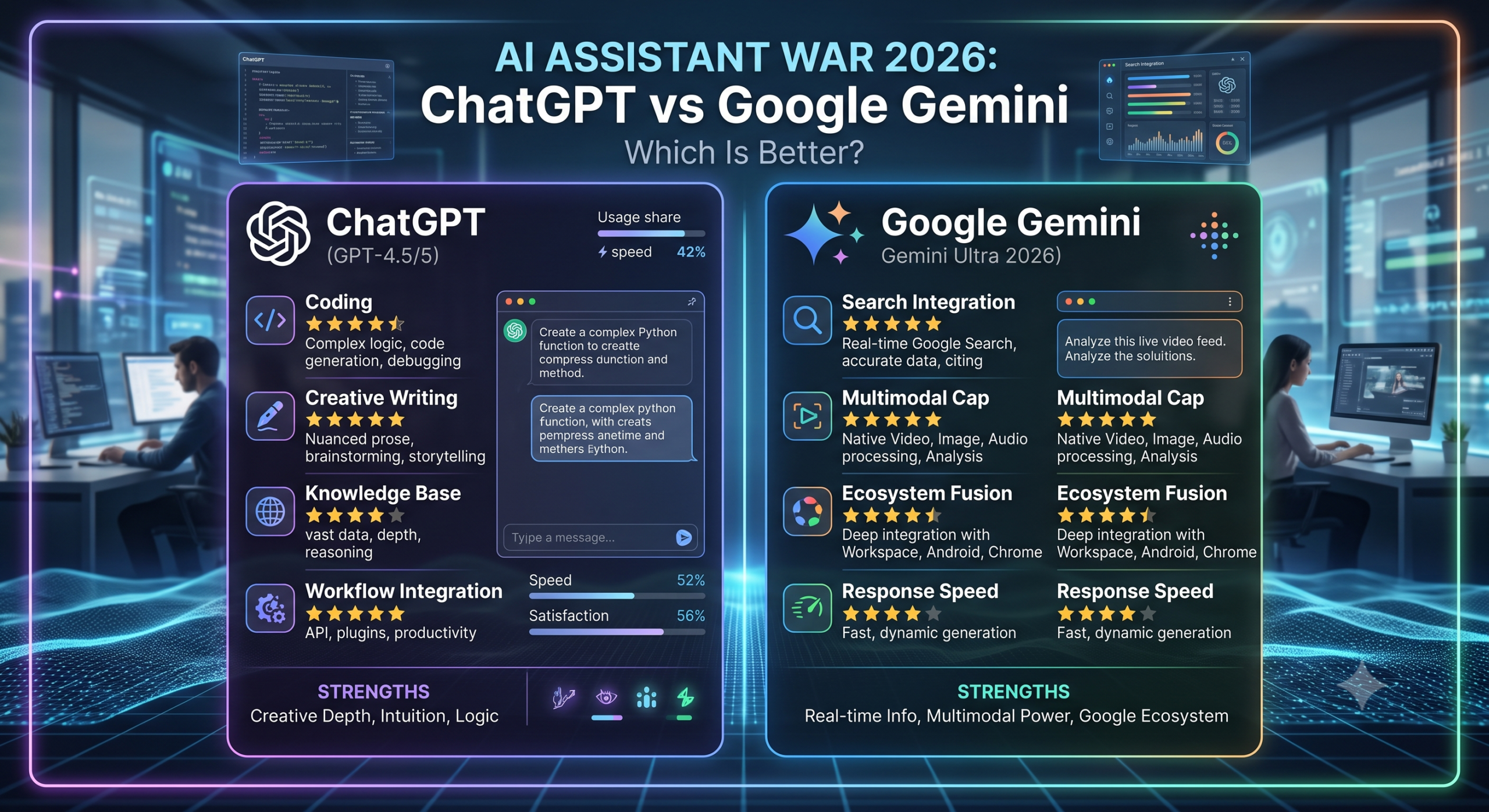
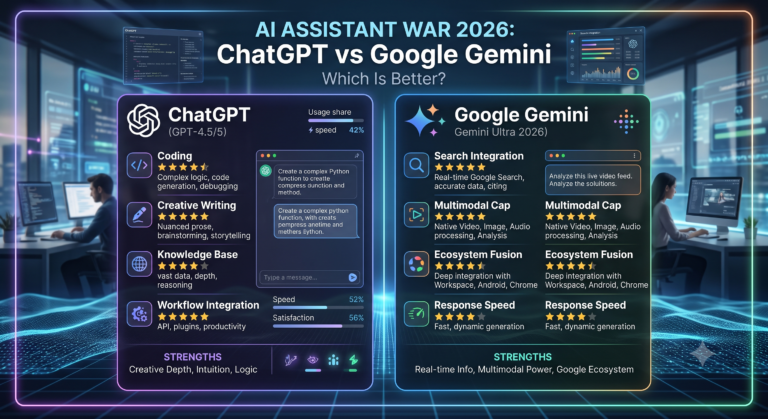
ChatGPT vs Google Gemini: Which One Is Better in 2026? ChatGPT vs Google Gemini: Quick Comparison

FeatureChatGPTGoogle Gemini
Easy to UseYesYes
Writing QualityExcellentVery Good
Creative ContentExcellentGood
Research HelpVery GoodExcellent
Google IntegrationLimitedExcellent
Coding SupportExcellentVery Good
Image UnderstandingYesYes
Study SupportExcellentExcellent
BrainstormingExcellentVery Good
ProductivityExcellentExcellent

Both tools perform well, but their strengths are slightly different.

User Interface

The user interface is the first thing that people notice.

ChatGPT offers a clean and simple design. Questions can be typed, and answers are shown quickly. The layout is easy to understand, even for first-time users.

Google Gemini also provides a simple interface. Users who already use Google products may feel familiar with its design.

Both tools are beginner-friendly, and very little learning is required before they can be used.

Writing and Content Creation

ChatGPT vs Google Gemini: Which One Is Better in 2026? Many users choose AI tools for writing articles, emails, blog posts, reports, and social media content.

ChatGPT performs very well in this area. It can generate detailed content, improve writing, suggest better ideas, and change the tone of a piece of text. It is often preferred by writers, bloggers, marketers, and students because of its smooth and natural writing style.

Google Gemini also creates good-quality content. It can prepare articles, summaries, emails, and reports. However, many users find that ChatGPT usually produces more detailed and creative writing.

If your main goal is content creation, ChatGPT is often the stronger choice.

ChatGPT vs Google Gemini: Which One Is Better in 2026? for Research and Information

Research is an important task for students and professionals.

Google Gemini has an advantage because it works closely with Google’s services. It can help users find information quickly and organize research more efficiently.

ChatGPT is also useful for research. It explains difficult concepts in simple language and helps users understand complex topics. It is especially helpful when detailed explanations or step-by-step guidance are needed.

For research that depends on recent information and Google services, Gemini may be more convenient. For learning and understanding concepts, ChatGPT is an excellent choice.

ChatGPT vs Google Gemini: Which One Is Better in 2026 for Coding Support

Many software developers and programming students use AI every day.

ChatGPT is widely used for coding because it can:

  • Explain programming concepts
  • Find errors in code
  • Suggest improvements
  • Write sample programs
  • Help with debugging
  • Explain technical topics in simple words

Google Gemini also supports coding and performs well in many programming languages.

For most developers and coding learners, ChatGPT is often preferred because its explanations are usually more detailed and easier to understand.

ChatGPT vs Google Gemini: Which One Is Better in 2026? for Learning and Education

Students have become one of the biggest groups of AI users.

ChatGPT can explain difficult subjects in simple language. It can prepare notes, solve practice questions, create quizzes, and help students understand concepts step by step.

Google Gemini is also useful for education. It helps students with research, assignments, and project work. Its integration with Google Docs and Drive can make school work more organized.

Both tools are excellent learning partners when they are used responsibly. They should support learning, not replace it.

Creativity and Brainstorming

Creative thinking is important for writers, designers, entrepreneurs, and marketers.

ChatGPT is often praised for generating creative ideas. It can suggest blog topics, marketing campaigns, business names, story ideas, and social media captions. Many users also use it to improve existing content and explore new angles.

Google Gemini also offers useful ideas and creative suggestions. It performs well for general brainstorming and planning. However, many users feel that ChatGPT usually provides more detailed and imaginative responses, especially for long-form writing and content creation.

If creativity is your main priority, ChatGPT is often considered the better option.

ChatGPT vs Google Gemini: Which One Is Better in 2026? for Productivity and Daily Tasks

Both ChatGPT and Google Gemini can save time by helping with everyday work.

Daily tasks that can be completed include:

  • Writing emails
  • Creating meeting notes
  • Planning schedules
  • Making to-do lists
  • Summarizing long documents
  • Preparing presentations
  • Organizing ideas

ChatGPT is widely used for personal productivity because it can help with a wide range of tasks in one place. Google Gemini becomes especially useful for people who already work with Google Workspace, as it fits naturally into that environment.

Both tools can improve productivity when they are used effectively.

Pricing and Free Plans

One of the biggest questions asked by users is about pricing. Many people want to know whether they should use the free version or pay for extra features.

ChatGPT offers a free plan that can be used for everyday tasks such as writing, learning, brainstorming, and asking questions. A paid plan is also available for users who need more advanced features, higher usage limits, and access to additional AI capabilities.

Google Gemini also provides a free version with many useful features. Premium plans are available for users who need advanced tools and deeper integration with Google’s services.

For most students and casual users, the free versions of both AI tools are enough for daily work.

ChatGPT vs Google Gemini: Which One Is Better in 2026? for Accuracy of Answers

Accuracy is one of the most important factors when choosing an AI assistant.

ChatGPT usually provides clear and detailed answers. Complex topics are often explained in simple language, which makes learning easier. However, like every AI tool, mistakes can sometimes be made. Facts should always be checked before they are used for important work.

Google Gemini also provides accurate answers for many questions. It performs especially well when users are working with information connected to Google’s ecosystem.

No AI tool is perfect. Important information should always be verified by using trusted sources.

ChatGPT vs Google Gemini: Which One Is Better in 2026? for Speed and Performance

Both ChatGPT and Google Gemini respond quickly.

Simple questions are usually answered within a few seconds. Longer requests may take a little more time because more information needs to be processed.

The speed of both tools may also depend on internet connection, server load, and the type of request.

For everyday use, both AI assistants offer a smooth experience.

Image Understanding and File Support

Modern AI tools are no longer limited to text. Images and documents can also be understood.

ChatGPT can help users understand images, explain charts, summarize documents, and answer questions about uploaded files.

Google Gemini also supports image understanding and works well with documents stored in Google Drive.

These features are especially useful for students, teachers, researchers, and professionals who work with different types of files.

Privacy and Security

Privacy has become an important concern for AI users.

Both ChatGPT and Google Gemini have privacy policies that explain how user data is handled. Even so, personal information, passwords, banking details, and confidential business information should never be shared with any AI tool.

Students and professionals should always use AI responsibly and protect their personal data.

Pros and Cons of ChatGPT

Pros

  • Excellent writing quality
  • Easy-to-understand explanations
  • Strong coding support
  • Creative content generation
  • Helpful for students and professionals
  • Suitable for many different tasks
  • Beginner-friendly interface

Cons

  • Some advanced features require a paid plan.
  • Information should always be verified before use.
  • Responses may sometimes miss the latest updates.

Pros and Cons of Google Gemini

Pros

  • Strong integration with Google services
  • Very useful for research
  • Easy to use
  • Good writing support
  • Helpful for students and office work
  • Smooth experience for Google Workspace users

Cons

  • Creative writing may sometimes be less detailed.
  • Some advanced features require a subscription.
  • Results may vary depending on the task.

Which AI Tool Is Better for Students?

Students usually need help with:

  • Homework
  • Assignments
  • Exam preparation
  • Research
  • Notes
  • Summaries

Both ChatGPT and Google Gemini perform well in these areas.

ChatGPT is often preferred because difficult topics can be explained in simple language. Practice questions, quizzes, and study notes can also be created quickly.

Google Gemini becomes very useful when assignments are prepared in Google Docs or when research is done using Google’s services.

For most students, ChatGPT is often considered the better learning assistant.

Which AI Tool Is Better for Writers?

Content writers, bloggers, journalists, and marketers usually need high-quality writing.

ChatGPT is widely used because it creates natural, detailed, and well-structured content. Articles, emails, social media posts, product descriptions, and marketing copy can all be prepared efficiently.

Google Gemini also supports content creation, but many writers prefer ChatGPT for long-form writing.

If writing is your main work, ChatGPT is often the stronger choice.

Which AI Tool Is Better for Developers?

Programming students and software developers use AI to write code, fix errors, and learn new technologies.

ChatGPT explains coding problems clearly and offers detailed solutions. Many programming languages are supported.

Google Gemini also performs well in coding tasks and can help developers solve technical problems.

For most coding tasks, ChatGPT is commonly chosen because of its detailed explanations.

Which AI Tool Is Better for Businesses?

Businesses use AI for customer support, content creation, planning, research, presentations, and productivity.

ChatGPT works well for creating content, preparing reports, brainstorming ideas, and improving communication.

Google Gemini is a good choice for businesses that already use Google Workspace because it fits naturally into their daily workflow.

The better option depends on the company’s needs and the tools it already uses.

ChatGPT vs Google Gemini: Final Comparison

FeatureBetter Choice
WritingChatGPT
Creative ContentChatGPT
Study HelpChatGPT
CodingChatGPT
ResearchGoogle Gemini
Google WorkspaceGoogle Gemini
BrainstormingChatGPT
Ease of UseTie
ProductivityTie
Everyday LearningChatGPT

Final Verdict

Both ChatGPT and Google Gemini are powerful AI assistants. They have helped millions of users save time and improve productivity.

If your main focus is writing, learning, coding, brainstorming, and content creation, ChatGPT is generally the better choice.

If you rely heavily on Google Docs, Gmail, Google Drive, and other Google services, Google Gemini may fit your workflow more naturally.

There is no single winner for everyone. The best AI tool depends on your goals and the way you work.

Many users even choose to use both tools together. ChatGPT may be used for writing and learning, while Google Gemini may be used for research and Google Workspace tasks. This combination can provide the best overall experience.

Frequently Asked Questions

Is ChatGPT better than Google Gemini?

ChatGPT is often preferred for writing, coding, learning, and creative work. Google Gemini performs very well for research and Google Workspace integration.

Which AI tool is free?

Both ChatGPT and Google Gemini offer free plans with useful features for everyday users.

Which AI is best for students?

ChatGPT is often considered one of the best AI tools for students because it explains topics in simple language and helps with study notes, homework, and learning.

Which AI is better for writing?

ChatGPT is generally preferred for blog writing, articles, essays, emails, and creative content.

Can ChatGPT and Google Gemini replace Google Search?

No. AI tools provide quick answers and explanations, but important information should still be verified using trusted sources when accuracy is critical.

Which AI is better for coding?

Both tools support coding, but ChatGPT is often chosen because of its detailed explanations and debugging support.

Is Google Gemini good for research?

Yes. Google Gemini is very useful for research, especially for users who work with Google’s services.

Can beginners use these AI tools?

Yes. Both ChatGPT and Google Gemini have simple interfaces and can be used by beginners without technical knowledge.

Are AI tools safe?

Both companies provide privacy information, but users should avoid sharing sensitive personal or confidential information with any AI assistant.

Should I use one AI tool or both?

Many people benefit from using both. The best choice depends on your tasks, preferences, and the tools you already use.

Conclusion

Artificial Intelligence has become an important part of modern education and work. Tasks that once required hours can now be completed more efficiently with AI support.

When comparing ChatGPT vs Google Gemini, both tools offer valuable features. ChatGPT stands out for writing, creativity, coding, and learning support. Google Gemini shines through its strong connection with Google’s ecosystem and its usefulness for research and productivity.

Instead of asking which AI is perfect, it is better to ask which AI matches your needs. By choosing the right tool – or by using both where appropriate – you can improve learning, save time, and work more efficiently in 2026 and beyond.

One thought on “ChatGPT vs Google Gemini: Which One Is Better in 2026?

Leave a Reply

Your email address will not be published. Required fields are marked *

Best Free AI Tools Every Student Should Use in 2026

Best Free AI Tools Every Student Should Use in 2026 : Artificial Intelligence (AI) has become a useful part of student life. Many school and college students now use AI tools every day. Homework can be completed faster. Notes can be prepared in less time. Difficult topics can be understood more easily. Research can also be improved with the help of AI.

The best part is that many AI tools are available for free. They offer useful features without asking students to pay money. These tools can save time, improve learning, and help students become more productive.

In this article, the best free AI tools every student should use in 2026 are explained in simple words. Their features, benefits, and best uses are also shared. For more informative articles like this, visit Postvaani.com and stay updated with the latest insights and news.

Best Free AI Tools Every Student Should Use in 2026 : Why AI Tools Are Helpful for Students

Students are expected to complete many tasks every day. Assignments, presentations, projects, exams, and research all require time and effort. Sometimes, it becomes difficult to manage everything together.

AI tools can make many of these tasks easier. Information can be found quickly. Long articles can be summarized. Better writing can be created. Grammar mistakes can be corrected. Study plans can also be prepared.

These tools should not be used to copy work. Instead, they should be used to understand topics better and improve learning.

1. ChatGPT

Best Free AI Tools Every Student Should Use in 2026 : ChatGPT is one of the most popular AI tools in the world. It is used by millions of students every day. Questions can be answered in simple language. Difficult concepts can be explained clearly. Essays, summaries, and study notes can also be created.

Students can ask questions from subjects like Science, Mathematics, History, Geography, English, Economics, and Computer Science.

Best Features

  • Simple explanations for difficult topics
  • Homework support
  • Essay writing help
  • Quick summaries
  • Coding assistance
  • Brainstorming ideas

Best For

  • School students
  • College students
  • Competitive exam preparation

2. Google Gemini

Best Free AI Tools Every Student Should Use in 2026 : Google Gemini is another powerful AI assistant. It has been developed by Google. It can answer questions, explain lessons, create study plans, and help with research.

Gemini works well with Google services. Students who already use Google Docs, Gmail, and Google Drive may find it very useful.

Best Features

  • Fast answers
  • Good research support
  • Google integration
  • Writing assistance
  • Learning help

Best For

Students who use Google products regularly.

3. Microsoft Copilot

Best Free AI Tools Every Student Should Use in 2026 : Microsoft Copilot has become a useful study partner. It helps students write documents, organize ideas, and improve assignments.

If Microsoft Word, Excel, or PowerPoint is used, Copilot can make work easier.

Best Features

  • Document writing
  • Presentation support
  • Research help
  • Spreadsheet assistance
  • Quick content suggestions

Best For

Students who prepare reports and presentations.

4. Grammarly

Best Free AI Tools Every Student Should Use in 2026 : Good grammar is important for assignments, emails, and essays. Grammarly can help students improve their writing.

Grammar mistakes, spelling errors, and punctuation problems can be found quickly. Better word choices are also suggested.

Best Features

  • Grammar correction
  • Spelling check
  • Sentence improvement
  • Better vocabulary
  • Writing suggestions

Best For

Students who write essays, reports, and emails.

5. Canva AI

Best Free AI Tools Every Student Should Use in 2026 : Many students need to create presentations, posters, resumes, and social media designs. Canva AI can help in making attractive designs without advanced skills.

Beautiful presentations can be prepared in a short time.

Best Features

  • AI presentation maker
  • Poster creation
  • Resume templates
  • Image editing
  • Design suggestions

Best For

Students who prepare projects and presentations.

6. Notion AI

Best Free AI Tools Every Student Should Use in 2026 : Many students struggle to organize notes and tasks. Notion AI makes this work much easier.

Study notes can be arranged. Daily schedules can be created. Important tasks can be managed in one place.

Best Features

  • Smart notes
  • Task management
  • Study planning
  • Writing support
  • Project organization

Best For

Students who want better productivity.

7. Perplexity AI

Best Free AI Tools Every Student Should Use in 2026 : Perplexity AI is becoming popular among students because it provides answers along with sources. This makes research more reliable.

Instead of spending hours searching on different websites, students can get useful information in one place.

Best Features

  • Research support
  • Source-based answers
  • Fast summaries
  • Easy explanations
  • Better learning

Best For

Research projects and academic work.

8. QuillBot

Best Free AI Tools Every Student Should Use in 2026 : Many students want their writing to become clearer and easier to read. QuillBot helps by rewriting sentences in better ways.

Long paragraphs can also be summarized.

Best Features

  • Paraphrasing
  • Summarizing
  • Grammar checking
  • Better sentence flow
  • Writing improvement

Best For

Assignments and article writing.

9. Otter.ai

Best Free AI Tools Every Student Should Use in 2026 : Taking notes during lectures can be difficult. Important points are often missed.

Otter.ai can record conversations and create written notes automatically.

Best Features

  • Voice recording
  • Automatic notes
  • Meeting summaries
  • Easy revision

Best For

Online classes and classroom lectures.

10. ElevenLabs

Students sometimes learn better by listening instead of reading.

Best Free AI Tools Every Student Should Use in 2026 : ElevenLabs can convert written text into natural-sounding speech. Notes, articles, and study material can be listened to while travelling or relaxing.

Best Features

  • Text-to-speech
  • Natural AI voices
  • Better listening experience
  • Language support

Best For

Students who prefer audio learning.

Tips for Using AI Tools Wisely

AI tools should always be used in a responsible way. They should support learning instead of replacing it.

Here are some useful tips:

  • Always understand the answer before using it.
  • Check facts from trusted sources.
  • Do not copy AI-generated content directly.
  • Add your own ideas and understanding.
  • Use AI to learn, not to cheat.
  • Follow your school or college guidelines.

Benefits of Free AI Tools for Students

Many benefits can be enjoyed when AI tools are used correctly.

Some of the biggest advantages include:

  • Time can be saved.
  • Learning can become easier.
  • Better assignments can be prepared.
  • Research can be completed faster.
  • Writing skills can be improved.
  • Productivity can be increased.
  • Confidence can be developed.

These benefits make AI an excellent learning partner for students.

Are Free AI Tools Enough?

For most students, free versions are enough. They provide many useful features without any cost.

Premium plans offer extra features, but they may not be necessary for regular school or college work.

Students should first explore the free versions before deciding to pay for advanced features.

Common Mistakes Students Should Avoid

Many students make mistakes while using AI tools.

These mistakes should be avoided:

  • Copying AI answers without checking them.
  • Depending completely on AI.
  • Ignoring teacher instructions.
  • Sharing personal information with AI tools.
  • Using outdated or incorrect information without verification.

Responsible use will always give better results.

Final Thoughts

Artificial Intelligence has changed the way students learn. Study materials can be prepared faster. Difficult subjects can be understood more easily. Writing can be improved. Research can also be completed in less time.

The best free AI tools every student should use include ChatGPT, Google Gemini, Microsoft Copilot, Grammarly, Canva AI, Notion AI, Perplexity AI, QuillBot, Otter.ai, and ElevenLabs. Each tool offers different benefits, and the right choice depends on the student’s needs.

It should always be remembered that AI is a learning assistant, not a replacement for hard work. Knowledge should be built through understanding, practice, and regular study. When AI is used wisely, it can become one of the most valuable study partners for every student.

Whether you are preparing for school exams, college assignments, competitive exams, or personal learning, these free AI tools can help you study smarter, save valuable time, and improve your overall learning experience.

Leave a Reply

Your email address will not be published. Required fields are marked *

Meghalaya’s Byrnihat Pollution Crisis: Why India’s Industrial Town Is Struggling to Breathe

Introduction

Meghalaya’s Byrnihat Pollution Crisis : When people think about air pollution in India, cities like Delhi, Mumbai, or Kolkata usually come to mind. However, over the past few years, a small industrial town in Meghalaya has caught everyone’s attention for a different reason. Byrnihat, located on the border of Meghalaya and Assam, has become one of the most polluted places in the country. In 2025, it was even listed as the world’s most polluted metropolitan area in the annual report released by IQAir, a global air quality monitoring organization. watch this video on Instagram

This shocking ranking has raised serious concerns among environmental experts, health professionals, and local residents. Many people living in Byrnihat have complained about breathing problems, eye irritation, skin diseases, and other health issues. The town, once known mainly for its industries, is now becoming an example of how rapid industrial growth without proper environmental protection can affect people’s lives. For read more such articles do visit on Postvaani

i want an image on  Meghalaya's Byrnihat Pollution Crisis

Where Is Byrnihat?

Byrnihat is a growing industrial town situated in the Ri-Bhoi district of Meghalaya. It lies along the Meghalaya-Assam border and is connected by a national highway. Due to its strategic location near Guwahati, many industries have been established here over the past two decades. The area has become an important manufacturing hub for both states.

Today, Byrnihat is home to dozens of factories that produce cement, ferroalloys, steel products, chemicals, beverages, plastics, and other industrial goods. While these industries have created employment and supported economic growth, they have also increased pollution in the region.

Why Has Byrnihat Become So Polluted?

Air pollution in Byrnihat is not caused by a single factor. Instead, it is the result of several environmental and human activities that together have made the situation worse.

1. Large Number of Industries

Meghalaya’s Byrnihat Pollution Crisis- Industrial emissions are considered one of the biggest reasons behind Byrnihat’s poor air quality. Many factories release smoke, dust, and harmful gases during manufacturing. Although pollution control systems are required, experts believe that emissions from several industrial units have continued to affect the surrounding environment.

The Meghalaya State Pollution Control Board inspected several factories in recent years. Some industries were found violating pollution norms, and closure notices were issued to multiple units. Despite these actions, pollution levels have remained a serious concern.

2. Heavy Traffic Movement

Byrnihat lies on a busy highway connecting Assam and Meghalaya. Every day, thousands of trucks carrying industrial goods travel through the town. Diesel-powered vehicles release harmful pollutants such as nitrogen oxides, particulate matter, and carbon emissions.

Long traffic jams are common near the border. During these traffic slowdowns, vehicles continue running, increasing the amount of pollution released into the air. Road dust created by heavy vehicles also adds to the problem.

3. Dust from Construction and Roads

Construction work has increased rapidly as industries continue to expand. Many roads remain dusty, and heavy vehicles lift fine particles into the air throughout the day.

Dust pollution may appear harmless, but tiny particles known as PM2.5 and PM10 can enter the lungs and even reach the bloodstream. These particles are considered among the most dangerous forms of air pollution because they are too small to be seen by the human eye.

4. Geography Makes the Situation Worse

Environmental experts have also pointed to Byrnihat’s natural geography. The town is surrounded by hills and has a bowl-shaped landscape. During calm weather conditions, polluted air gets trapped close to the ground instead of moving away.

This means that smoke, dust, and industrial emissions remain in the atmosphere for longer periods. Even if pollution sources remain the same, the local geography makes the air quality much worse compared to open areas.

Meghalaya’s Byrnihat Pollution Crisis- Pollution Is More Than Just Dirty Air

The problem in Byrnihat is not limited to air pollution alone. Scientific studies have also found contamination in groundwater around the industrial area. Researchers detected heavy metals such as lead, cadmium, and chromium at levels higher than recommended safety standards in some locations.

These contaminants may enter drinking water and agricultural land, creating long-term health risks for local communities if proper treatment and monitoring are not maintained. Pollution has also affected nearby rivers and farming activities, making life more difficult for many residents.

Meghalaya’s Byrnihat Pollution Crisis: Why India’s Industrial Town Is Struggling to Breathe (Part 2)

How Pollution Is Affecting People’s Health

Meghalaya’s Byrnihat Pollution Crisis- The biggest impact of pollution in Byrnihat is on the health of local people. Many residents say that breathing has become difficult, especially during the winter months when smoke and dust remain trapped in the air. Hospitals and health centres have reported an increase in patients suffering from cough, asthma, breathing problems, and chest infections. Doctors also say that eye irritation, skin rashes, and allergies have become common complaints among people living close to industrial areas.

Children and elderly people are the most affected because their bodies are more sensitive to polluted air. Long-term exposure to PM2.5 particles can increase the risk of heart disease, lung disease, stroke, and even certain types of cancer. These tiny particles are so small that they can enter deep into the lungs and even reach the bloodstream.

Farmers have also reported that dust and industrial emissions settle on crops and reduce their quality. Some residents say that clothes cannot be dried outside because they quickly become covered with black dust. These problems have made daily life difficult for many families.

Why Byrnihat Ranked Among the World’s Most Polluted Areas

The annual World Air Quality Report published by IQAir brought global attention to Byrnihat after it recorded an annual average PM2.5 concentration of about 128 micrograms per cubic metre in 2024, making it one of the most polluted metropolitan areas in the world. This level is many times higher than the air quality guideline recommended by the World Health Organization (WHO).

Experts believe that no single source is responsible. Instead, pollution is caused by a combination of industrial emissions, heavy truck movement, road dust, construction activities, burning of waste, and the town’s geographical location, which traps polluted air. This combination has made the air quality much worse than many larger cities.

Government Action to Control Pollution

Meghalaya’s Byrnihat Pollution Crisis – After pollution levels became a national concern, both the Meghalaya and Assam governments started taking steps to improve air quality.

The Meghalaya State Pollution Control Board inspected several industrial units and found that many were not following environmental rules. Closure notices were issued to industries that failed to control emissions, while some factories were temporarily shut down until they met pollution standards.

At the same time, both state governments agreed that pollution cannot be controlled by one state alone because Byrnihat lies on the border. A joint committee was formed to monitor industries, improve air quality monitoring, and develop long-term solutions for the region.

Authorities have also discussed better traffic management, stricter pollution checks for industries, more tree plantation drives, and stronger implementation of the National Clean Air Programme (NCAP). These measures are expected to reduce pollution over time, although experts say consistent enforcement is necessary.

Challenges That Still Remain

Despite government action, solving Byrnihat’s pollution problem will not be easy.

The town has around 80 industries that provide employment to thousands of people. Closing factories permanently could affect the local economy and people’s livelihoods. Therefore, authorities must find a balance between industrial development and environmental protection.

Another challenge is that pollution crosses state borders. Since industries are located in both Meghalaya and Assam, action taken by only one state cannot completely solve the problem. Better coordination, data sharing, and common pollution standards are required.

Monitoring pollution throughout the year is also important because air quality changes with weather conditions. Experts believe continuous monitoring and public reporting will help identify pollution sources more accurately.

What Can Be Done?

Meghalaya’s Byrnihat Pollution Crisis- Environmental experts have suggested several practical solutions to improve air quality in Byrnihat.

Industries should install modern pollution-control equipment and maintain it regularly. Factory emissions should be monitored continuously, and strict penalties should be imposed on units that violate environmental rules.

Heavy trucks should be inspected regularly to reduce vehicle emissions. Better road maintenance can reduce dust pollution, while covering construction materials can prevent fine particles from spreading into the air.

Tree plantation should also be encouraged because green spaces help improve air quality. Local communities can support these efforts by avoiding open waste burning and reporting pollution violations to the authorities.

Most importantly, both Meghalaya and Assam must continue working together because clean air cannot be achieved through isolated efforts.

Conclusion

Meghalaya’s Byrnihat Pollution Crisis- Byrnihat’s pollution crisis is a reminder that economic growth should never come at the cost of public health. The town has developed into an important industrial centre, but years of unchecked emissions, increasing traffic, road dust, and weak environmental compliance have created serious air pollution.

The good news is that governments have started taking action. Industrial inspections, closure of non-compliant units, better monitoring, and joint efforts between Meghalaya and Assam are positive steps. However, lasting improvement will require strict implementation of environmental laws, cleaner technologies, responsible industries, and active public participation.

Clean air is a basic necessity for every citizen. Byrnihat’s experience should encourage policymakers, industries, and communities across India to adopt sustainable development practices that protect both economic progress and the environment.

One thought on “Meghalaya’s Byrnihat Pollution Crisis: Why India’s Industrial Town Is Struggling to Breathe

Leave a Reply

Your email address will not be published. Required fields are marked *

Global Warming in India: Current Situation, Causes, Effects, and Solutions

Global Warming in India : Have you noticed that summers are getting longer? That rains are arriving late — or not arriving at all in some places? That winters are becoming shorter and milder?

If you live in India, you have probably felt all of this. And you are not imagining it.

Our planet is getting hotter. Scientists call this global warming. And India — with its 1.4 billion people, its farmers, its coastlines, and its Himalayan rivers – is being affected in ways that can no longer be ignored. Read more articles like this to go Postvaani.com


What Is Global Warming, Simply Put?

Global Warming in India : When we burn coal, petrol, or wood, gases like carbon dioxide (CO₂) are released into the air. These gases act like a blanket around the Earth. They trap the sun’s heat and stop it from escaping back into space. Over time, the Earth gets warmer.

This warming affects everything — the weather, the oceans, the glaciers, the seasons, and even the food we eat.

India is not the only country being affected. But because of its size, its geography, and the millions of people who depend on farming and nature, the impact here is especially serious.


Global Warming in India : What Is Happening in India Right Now?

The numbers tell a clear story. India’s average temperature has risen by about 0.7°C over the last hundred years. That may not sound like much. But in the world of climate, even half a degree matters enormously.

Global Warming in India : In 2024, large parts of North India recorded temperatures above 45°C in May and June. Cities like Delhi, Jaipur, and Lucknow saw heatwave alerts for days at a stretch. Schools were shut. People were asked to stay indoors. Hospitals reported a rise in heatstroke cases.

In Rajasthan, the desert town of Phalodi – which already holds India’s all-time heat record of 51°C — is seeing dangerous heat arrive earlier every year.

Meanwhile, in the Northeast, Assam was hit by severe floods in 2023 and 2024. Thousands of families were displaced. Crops were destroyed. The Kaziranga National Park — home to the one-horned rhino — was submerged for weeks.

These are not isolated events. They are part of a pattern that is being repeated, year after year, across the country.


Global Warming in India : What Is Causing This?

Fossil Fuels and Vehicles

Global Warming in India : India is the world’s third-largest emitter of greenhouse gases. A large part of this comes from burning coal in power plants, petrol in cars and trucks, and gas in factories.

Every time a vehicle is started in a crowded city like Mumbai or Delhi, a small amount of CO₂ is released. Multiply that by millions of vehicles, and the numbers add up fast.

Deforestation

Forests are nature’s air filters. They absorb CO₂ and release fresh oxygen. But in India, forests have been cut down for roads, dams, housing projects, and farmland.

When trees are removed, two things happen — less CO₂ is absorbed, and the land gets hotter. Both make global warming worse.

Agriculture

Global Warming in India : India has one of the largest cattle populations in the world. Cattle release methane — a greenhouse gas that is even more powerful than CO₂. Rice paddies also release methane in large amounts.

This does not mean farming is bad. But it does mean that farming practices need to be updated to reduce emissions wherever possible.

Rapid Urbanisation

India’s cities are growing faster than ever. More buildings mean more air conditioners. More air conditioners mean more electricity. More electricity means more coal is burned. It is a cycle that keeps feeding itself.

Cities are also significantly hotter than surrounding rural areas. This is called the urban heat island effect — and it is being experienced in almost every major Indian city today.


How Is India Being Affected?

Heat Waves Are Getting Worse

Global Warming in India : Every year, heat waves are arriving earlier and lasting longer. In April 2022, North India and Central India recorded temperatures that are normally seen only in peak summer. Wheat crops were damaged across Haryana and Punjab, affecting food production.

Outdoor workers — construction labourers, farmers, street vendors — are the most exposed. Many of them have no choice but to work in the heat.

Monsoon Is Becoming Unpredictable

India’s farmers have depended on the monsoon for thousands of years. But the monsoon is now behaving differently.

In 2023, Himachal Pradesh and Uttarakhand were hit by extreme cloudbursts. Entire villages were washed away. Roads and bridges were destroyed. At the same time, parts of Karnataka, Maharashtra, and Tamil Nadu reported drought conditions — their reservoirs nearly empty, their soil cracked and dry.

Too much water in one place. Too little in another. This is what climate change looks like on the ground.

Glaciers Are Melting

The Himalayan glaciers are the source of water for rivers like the Ganga, Yamuna, Indus, and Brahmaputra. Hundreds of millions of people depend on these rivers for drinking water, farming, and electricity.

But these glaciers are melting — and they are melting fast. Studies have shown that Himalayan glaciers are retreating at a rate faster than the global average. If this continues, water availability in North India could become a serious crisis within the next few decades.

Sea Levels Are Rising

India has a coastline of more than 7,500 kilometres. Cities like Mumbai, Chennai, and Kochi are located right on the edge of the sea.

As global temperatures rise, polar ice melts, and sea levels go up. Mumbai already experiences severe flooding during monsoon season. Some areas of the city face the risk of being permanently flooded in the future if nothing changes.

In the Sundarbans — the delta region shared by West Bengal and Bangladesh — rising sea levels are already swallowing islands. Entire fishing communities have been displaced.

Air Pollution

Global warming in India and air pollution go hand in hand. Every winter, Delhi is covered in a thick layer of smog. Vehicle exhaust, factory emissions, and the burning of crop stubble in Punjab and Haryana combine to create a toxic mix.

In 2024, Delhi recorded some of the worst air quality in the world for several days in a row. The AQI — Air Quality Index — crossed 400 in many areas. That is classified as “severe.” Breathing that air is like smoking several cigarettes a day.

Children, elderly people, and those with breathing conditions suffer the most.


What Can Be Done?

Global Warming in India : The situation is serious. But it is not hopeless.

Clean energy is the biggest solution. India has already made impressive progress here. The country is now among the top five nations in the world for installed solar energy capacity. The government has set a target of 500 gigawatts of renewable energy by 2030. Solar panels are being installed on rooftops, in fields, and on government buildings across the country.

Planting trees helps. Forests absorb CO₂ and keep local temperatures down. Community tree-planting drives, forest protection laws, and green urban planning can all make a difference.

Public transport reduces emissions. Metro rail systems in cities like Delhi, Bengaluru, Hyderabad, and Mumbai carry millions of passengers every day — and reduce the number of private vehicles on the road. Expanding these networks further would be a big step forward.

Smarter farming is needed. Farmers can be supported to use drip irrigation, grow climate-resistant crops, and avoid stubble burning. This protects both their livelihoods and the environment.

Awareness matters. When people understand climate change, Global Warming in India increasing, they make different choices — in the way they travel, the way they use electricity, and the way they vote. Schools, local communities, and the media all have a role to play in spreading this awareness.


Final Thoughts of Global Warming in India

Global warming in India is not a future problem. It is happening right now — in India’s fields, in its rivers, in its cities, and in its skies.

The farmers of Vidarbha, the fisherfolk of Kerala, the glaciers of Kedarnath, the floodplains of Assam — all of them are already living with the consequences.

But India is also a country of incredible resilience and innovation. The choices made today — by governments, by businesses, and by ordinary people — will decide what kind of country is left for the next generation.

The Earth is sending a clear message of Global Warming in India . It is time to listen.

One thought on “Global Warming in India: Current Situation, Causes, Effects, and Solutions

Leave a Reply

Your email address will not be published. Required fields are marked *

“News vs Article – Understanding the Key Differences”

Introduction

News vs Article – Understanding the Key Differences – People often think news and articles are the same thing. But they are different. Both give information to readers, but they do it in different ways.

News tells people about recent events. It gives quick facts about what is happening right now. Articles explain a topic in more detail. They help readers understand a subject better.

You can find news and articles in newspapers, magazines, blogs, and websites. Journalists, students, bloggers, and website owners use both types of writing every day.

It is important to know the difference between news and articles. It helps readers understand what type of content they are reading. It also helps writers choose the right writing style for their content.

In this article, we will explain what news is, what an article is, and the main differences between them in simple words. For more informative articles like this, visit Postvaani.com and stay updated with the latest insights and news.


What is News?

News vs Article – Understanding the Key Differences – News is information about recent events. It tells people what is happening in the world. The main goal of news is to inform readers quickly and clearly.

News covers many topics. These include politics, sports, business, health, entertainment, weather, and crime. News stories focus on facts. They answer important questions like:

  • What happened?
  • When did it happen?
  • Where did it happen?
  • Who was involved?
  • Why did it happen?

News writing uses short and simple sentences. It avoids personal opinions. Journalists try to stay neutral and report only verified facts.

News is also time-sensitive. A news story is most important when the event is new or recent. For example, election results, cricket match scores, accidents, or government announcements are all examples of news.

People read news to stay updated about current events and important information.

News vs Article – Understanding the Key Differences, What is an Article?

News vs Article – Understanding the Key Differences – An article is a piece of writing that explains a topic in detail. The main goal of an article is to give readers more information and a better understanding of a subject.

Articles can cover many topics such as education, health, travel, technology, lifestyle, business, and entertainment. Some articles inform readers, while others share opinions, advice, or analysis.

Unlike news, articles are usually longer. Writers use examples, research, facts, and explanations to make the topic clear and interesting. Articles may also include the writer’s personal views, depending on the type of article.

There are many kinds of articles. These include:

  • Informational articles
  • Feature articles
  • Opinion articles
  • How-to guides
  • Review articles

For example, a news report may say that fuel prices increased today. An article may explain why fuel prices are rising and how they affect people.

Articles are less focused on speed and more focused on depth. Many articles stay useful for a long time, especially educational or informational content.


Main Difference Between News and Article

News vs Article – Understanding the Key Differences – News and articles both give information, but they are very different in purpose and style.

The main purpose of news is to report recent events quickly. The main purpose of an article is to explain a topic in detail.

News uses short and direct sentences. It focuses only on important facts. Articles use more explanation and detail. They often include examples, background information, and opinions.

Another big difference is length. News reports are usually short because they only cover the main points. Articles are longer because they discuss the topic deeply.

News is also time-sensitive. People read news to know what is happening right now. Articles can stay useful for months or even years.

For example, a news story may report that a new education policy was announced today. An article may explain how the new policy will affect students, teachers, and schools.

Here is a simple comparison between news and articles:

FeatureNewsArticle
PurposeGives quick informationExplains a topic deeply
LengthShortLong
StyleDirect and factualDetailed and descriptive
FocusCurrent eventsAnalysis and explanation
LifespanShort-termLong-term

News vs Article – Understanding the Key Differences – Examples of News and Articles

Examples make it easier to understand the difference between news and articles.

A news report gives quick facts about an event. For example:

“Government Announces New Traffic Rules”

News vs Article – Understanding the Key Differences – This type of news story explains:

  • What the government announced
  • When the rules will start
  • Where the rules will apply
  • Basic details about the changes

The report stays short and focuses only on facts.

Now look at an article example:

“How the New Traffic Rules Will Affect Daily Commuters”

This article may include:

  • Reasons behind the new rules
  • Problems people may face
  • Expert opinions
  • Benefits of the changes
  • Tips for commuters

The article goes deeper into the topic and helps readers understand the full picture.

In simple words, news tells people what happened, while articles explain why it matters.
Similarities Between News and Articles

News and articles are different, but they also share some similarities.

Both news and articles give information to readers. They help people learn about events, topics, and important issues. Writers need good research and writing skills to create both types of content.

You can find both news and articles in newspapers, magazines, blogs, and websites. Many media companies publish both on the same platform.

Both also help readers stay informed and aware. Whether someone reads a news report or an article, they gain knowledge about a topic.

Another similarity is that both need clear and easy-to-understand writing. Good content should help readers understand the message quickly.


Why Knowing the Difference Matters

News vs Article – Understanding the Key Differences – Knowing the difference between news and articles is important for both readers and writers.

Readers can better understand the type of information they are reading. News gives quick facts about current events, while articles give deeper explanations and opinions.

This knowledge also helps students and journalists improve their writing skills. They can choose the correct writing style based on their purpose.

For bloggers and website owners, understanding the difference is useful for content planning and SEO. News content brings fast traffic because it covers trending topics. Articles often bring long-term traffic because they stay relevant for a longer time.

Understanding the difference also improves media literacy. People can separate factual reporting from opinions and analysis more easily.


Conclusion

News vs Article – Understanding the Key Differences – News and articles are both important forms of writing, but they serve different purposes.

News focuses on recent events and gives readers quick and factual information. It uses short and direct writing to help people stay updated about what is happening.

Articles focus on explaining topics in detail. They include analysis, examples, opinions, and background information to help readers understand a subject better.

In simple words, news tells readers what happened, while articles explain the topic more deeply.

By understanding the difference between news and articles, readers can better understand the content they consume, and writers can create more effective and useful content.

Cheack more news articles here.

One thought on ““News vs Article – Understanding the Key Differences”

  1. The article is very good and understandable. Its very knowledgable as well and this made a really great point about news and articles.

Leave a Reply

Your email address will not be published. Required fields are marked *

Call Now Button